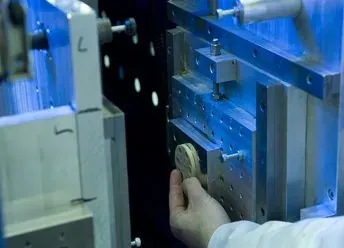
Plastic welding joins thermoplastic components without adhesives or fasteners. Gemini runs ultrasonic welding and hot plate welding in-house, plus heat staking, for parts that need a high-strength or leak-tight seal, or for complex geometries that will not bolt together. A well-made weld joint can be stronger than the parent material, and the process is fast and non-contaminating.
The Process
Plastic welding fuses two thermoplastic parts at their joint face, creating a bond that comes from the material itself rather than from glue or mechanical fixings. Done well, the weld can be stronger than the surrounding wall and it adds nothing that could contaminate the assembly, which is why it is used for sealed and hygienic products as well as structural ones.
We lead with ultrasonic plastic welding for small to medium thermoplastic components and hot plate welding for larger or leak-tight joints. Our ultrasonic welding covers ABS, PP and HIPS, and runs insert, stake, stud weld, degate and spot weld operations as well as full joins. Heat staking lets us lock components or metal inserts into a moulded body by reforming a plastic boss over them.
Alongside ultrasonic and hot plate, we also run linear vibration and hot-air welding in-house, so the method can be matched to the material, the joint and the volume. Welding sits next to our injection moulding and assembly work, so moulded parts can be joined and built up under one roof.
Read more about our welding methods26+
Years in business
4.7★
Rated on Google
ISO 9001
Certified quality
100%
Made in the UK
Why Gemini
A sound weld can be stronger than the parent material, with no added adhesive.
Hermetic seals for enclosed parts, with a non-contaminating process for hygienic work.
Ultrasonic, hot plate, heat staking, linear vibration and hot-air welding.
Parts moulded, joined and built into finished assemblies in our UK facilities.
Methods & Operations
Different joints call for different methods. We choose the welding process from the material, the seal the part needs and the run size, and we can combine welding with insert and staking operations in the same cell.
Ultrasonic welding joins thermoplastic parts using the heat generated at the interface between them, with no adhesives or consumables. It is fast, efficient and non-contaminating, and we use it to weld thermoplastics including ABS, PP and HIPS.
Materials: ABS, PP and HIPS
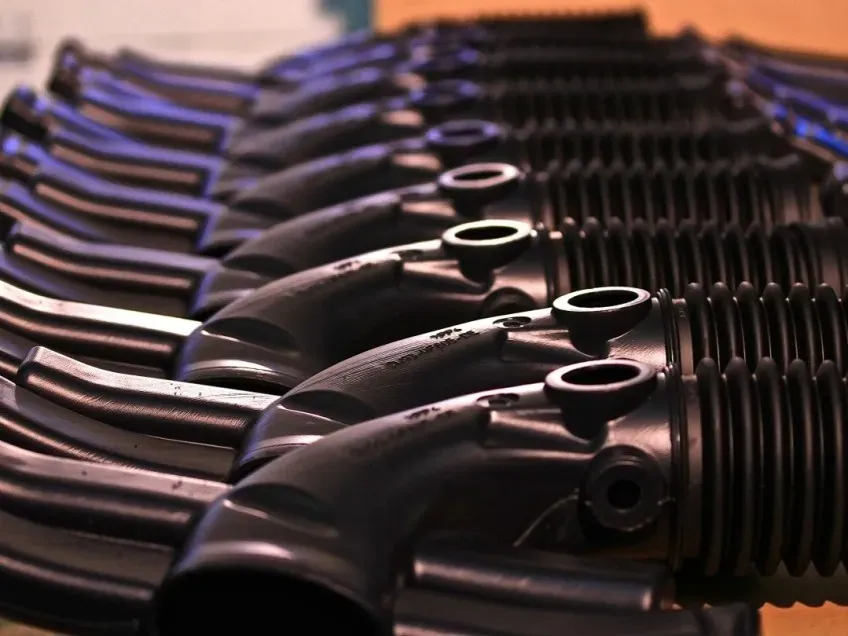
Hot plate welding suits parts that need a high-strength, leak-tight seal, or components with complex geometry such as irregular shapes or curved sections. It handles sizes from micro mouldings through to complete air duct systems.
Materials: soft TPE to glass-reinforced nylon
Linear vibration welding joins larger thermoplastic parts by moving them against each other under pressure, generating heat at the joint to fuse them.
Best for: larger assemblies and long weld lines
Forced air welding uses a stream of heated air to soften the joint before the parts are pressed together, a flexible method for joining thermoplastic components.
Best for: flexible joining across thermoplastics
Heat staking uses controlled heat and pressure to reshape a plastic boss and lock a second component in place, with no adhesives or separate fasteners.
Best for: securing inserts, PCBs and panels
Send us details about your part and we'll get back to you within 24 hours.