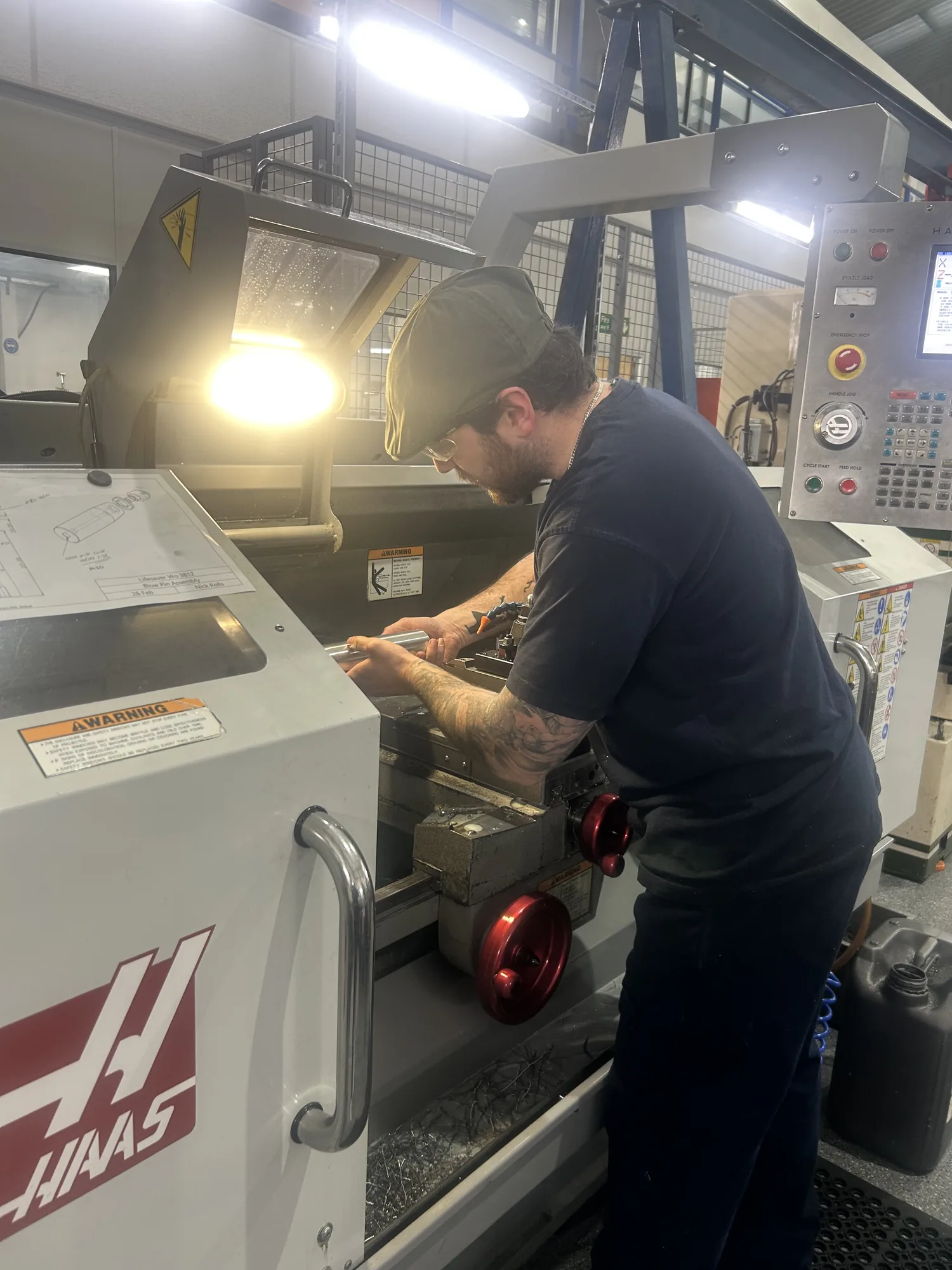
After moulding, we finish and decorate parts to a complete product in house in the UK. Pad printing is the core of it, alongside tampo and screen printing, laser marking, spraying, soft-feel lacquer and vacuum metallising, so a bare moulding leaves as a branded, inspected part without ever leaving the building.
Why Gemini
Plastic finishing and decoration turn a bare moulding into a finished product. It covers the print, marking, texture, colour and plating a part carries, plus the insert fitment that readies it for assembly. We run these processes in house in the UK, on the same site as the presses.
Pad printing services sit at the centre of this. Pad and tampo printing put logos, graphics and text onto curved and irregular mouldings, in single or multiple colours registered to the part. Around that we add laser marking, silk screen and rotary screen printing, spraying and soft-feel lacquer, vacuum metallising and chrome plating.
Because finishing sits next to the injection moulding, a part can move straight from the press into decoration and assembly, so you deal with one accountable source rather than a chain of finishing vendors.
Why Gemini
Decoration runs on our own lines in Buckinghamshire, not shipped out and back.
Pad, tampo and screen printing, laser marking, spraying and plating in one place.
Printing, spraying, marking, plating and insert fitment to a finished, inspected part.
Moulding, finishing and assembly in-house, fewer hand-offs between part and product.
Pad Printing
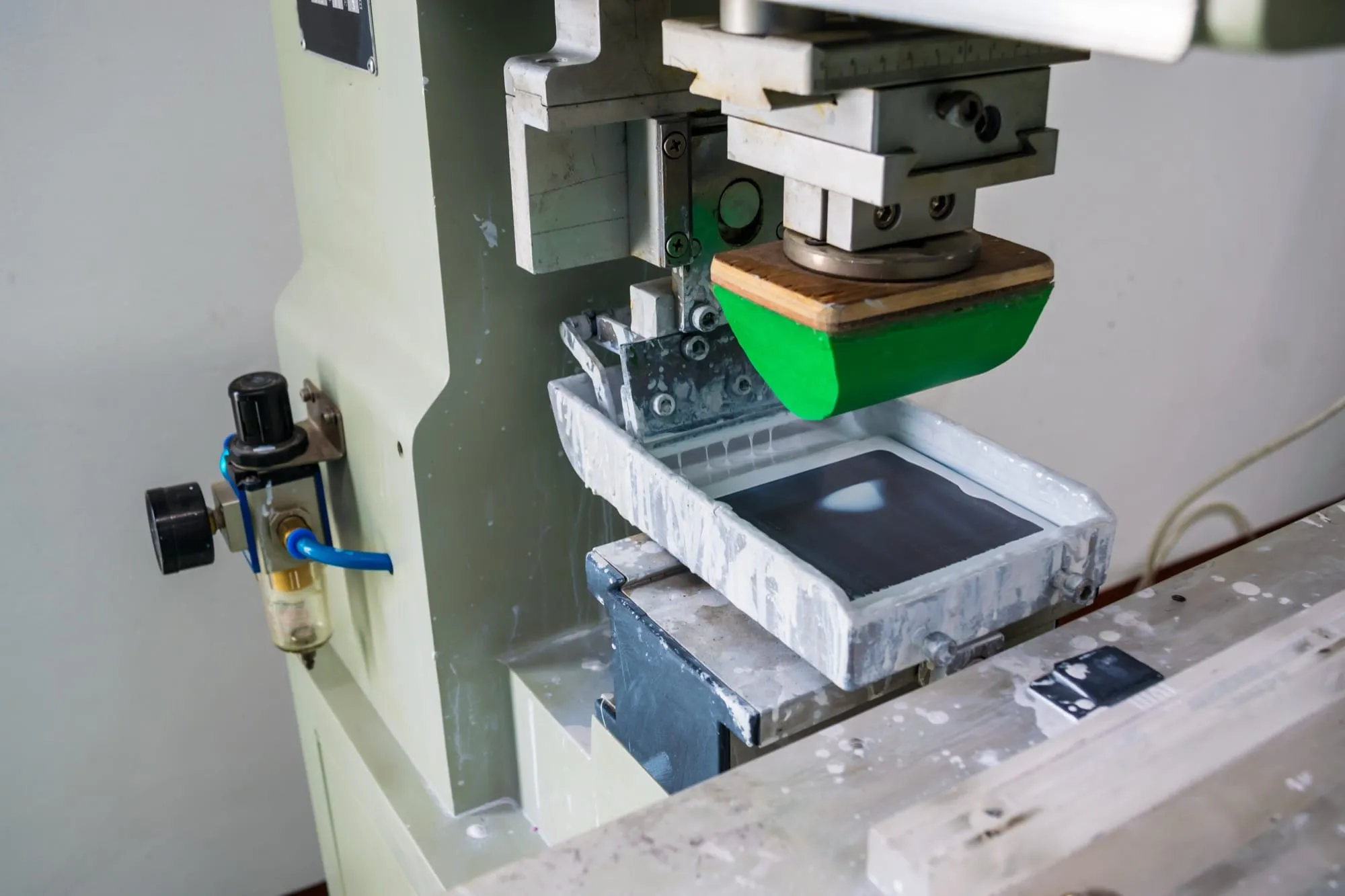
Pad printing, also called tampo printing, transfers ink from an etched plate onto the surface of a part using a soft silicone pad. Because the pad flexes, it prints cleanly onto curved, recessed and textured surfaces that flat methods like screen printing cannot reach, which makes it the standard way to decorate moulded plastic parts.
We use pad printing to apply logos, branding, dials and scales, safety warnings, serial numbers and batch codes, in single or multiple colours. It suits everything from consumer product branding to functional and regulatory markings on medical, automotive and industrial components, and the inks are matched to the plastic so the print resists handling, cleaning and wear.
Our pad printing services run on the same site as the moulding, so a part can be moulded, printed and finished without going out to a separate decorator.
Laser Marking
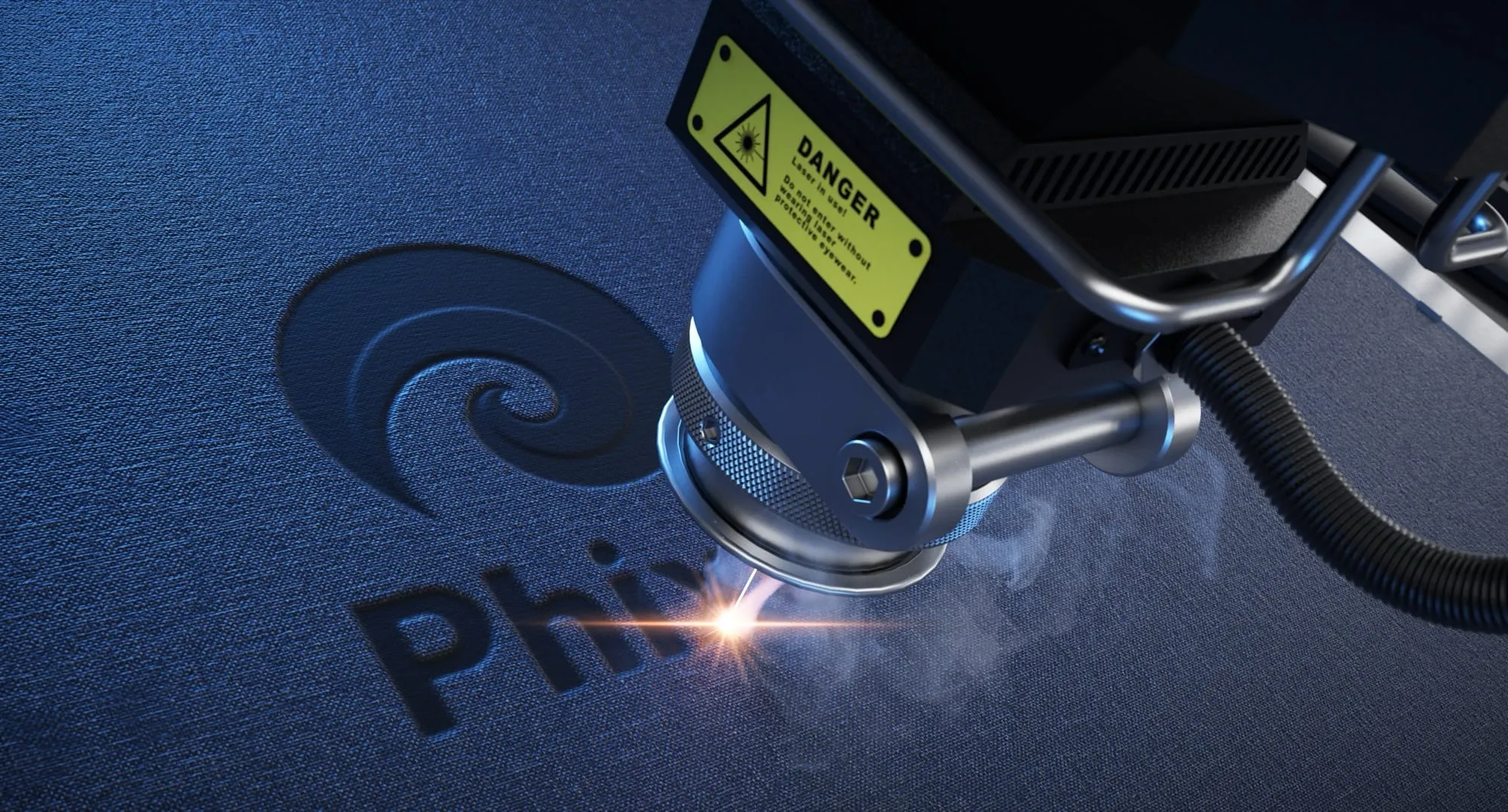
Laser marking uses a focused laser to mark the surface of a plastic part directly, with no ink, consumables or contact. It produces a permanent, hard-wearing mark that will not rub off, which suits serial numbers, barcodes, data-matrix codes, logos and traceability marks.
Because it is a non-contact process with nothing to replenish, laser marking plastic parts is fast, repeatable and clean, and it is well suited to components that need durable identification for regulated or traceable sectors such as medical, defence and automotive.
More Finishing
Beyond pad printing and laser marking, our plastic decoration and finishing covers a range of print, coating and functional processes, all run in house:
Printing
Silk screen printing for dense, hard-wearing print across flat and larger areas.
Rotary screen printing for cylindrical parts and continuous, wrap-around print.
Coatings and finishes
Spray painting in colour-matched finishes across a moulding.
Soft-feel lacquer to give mouldings a warmer, tactile surface for handheld products.
Chrome plating for a bright, reflective metallic finish on plastic parts.
Vacuum metallising, sometimes spelled vacuum metalising, deposits a thin reflective metal coating for a metallic look.
Functional
RF shielding applied inside enclosures where the electronics need screening.
Fitment of threaded inserts, fasteners and hardware into finished mouldings, ready for assembly.
Quality
Finishes matched to your reference and inspected before dispatch, to a consistent, signed-off standard.
Send us details about your part and we'll get back to you within 24 hours.