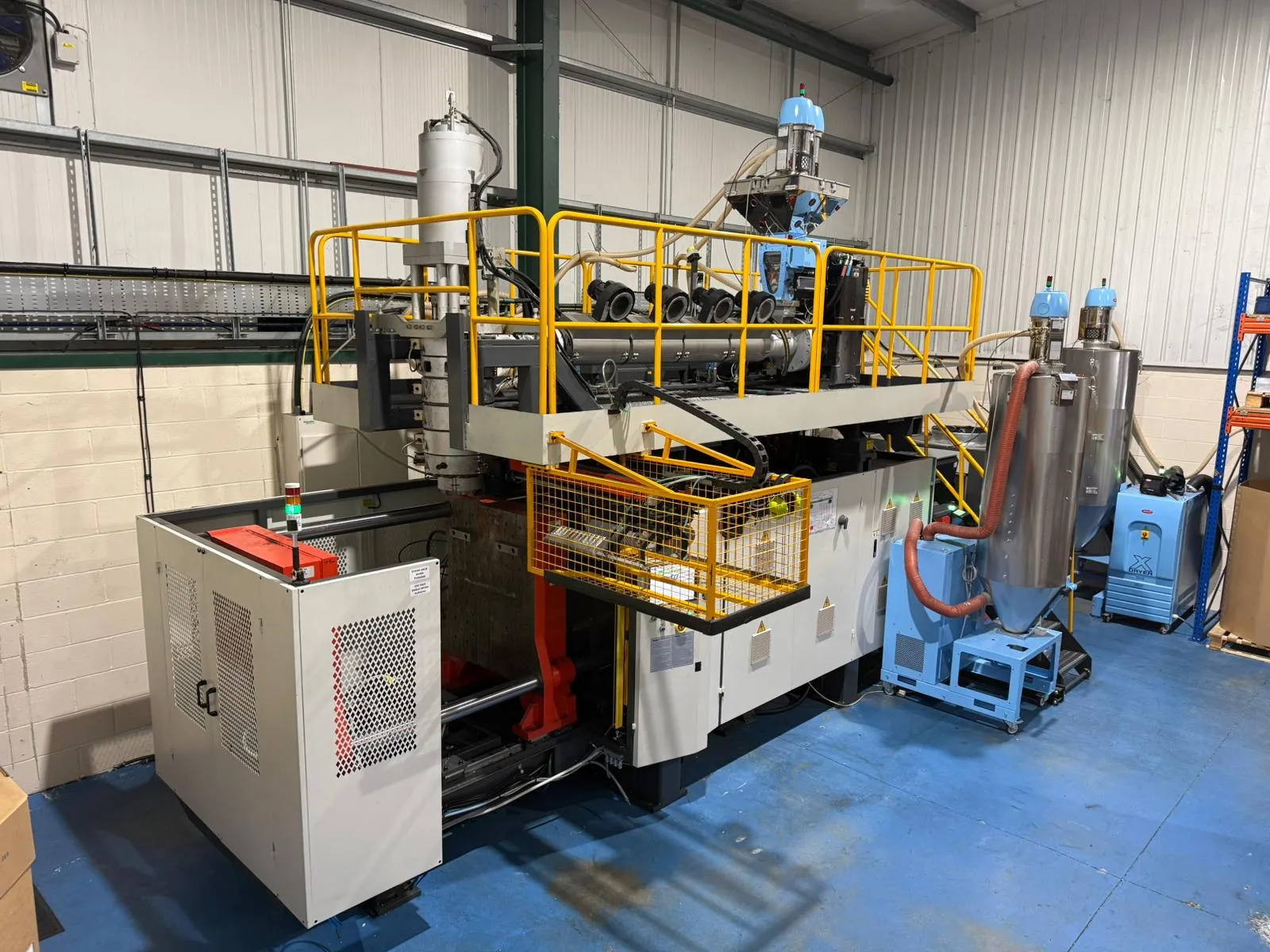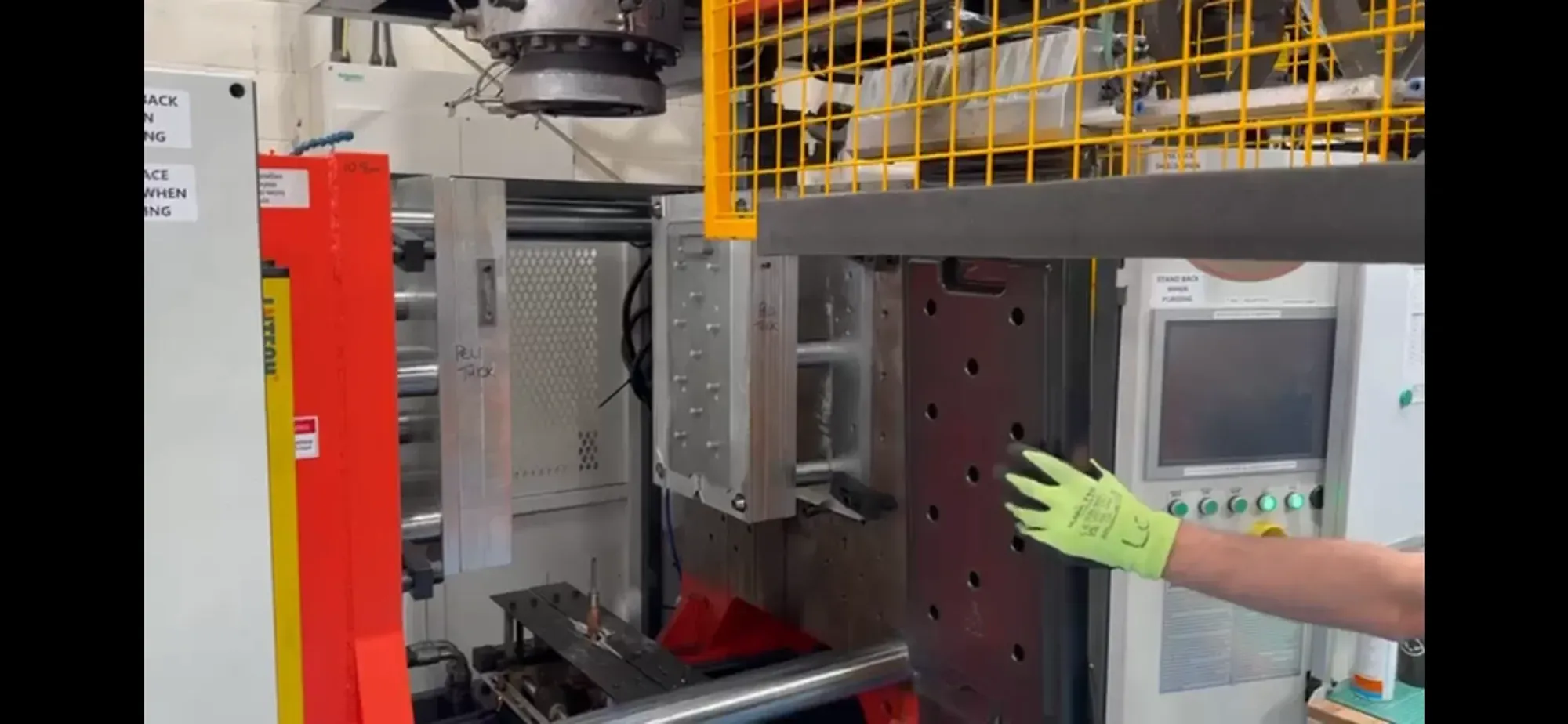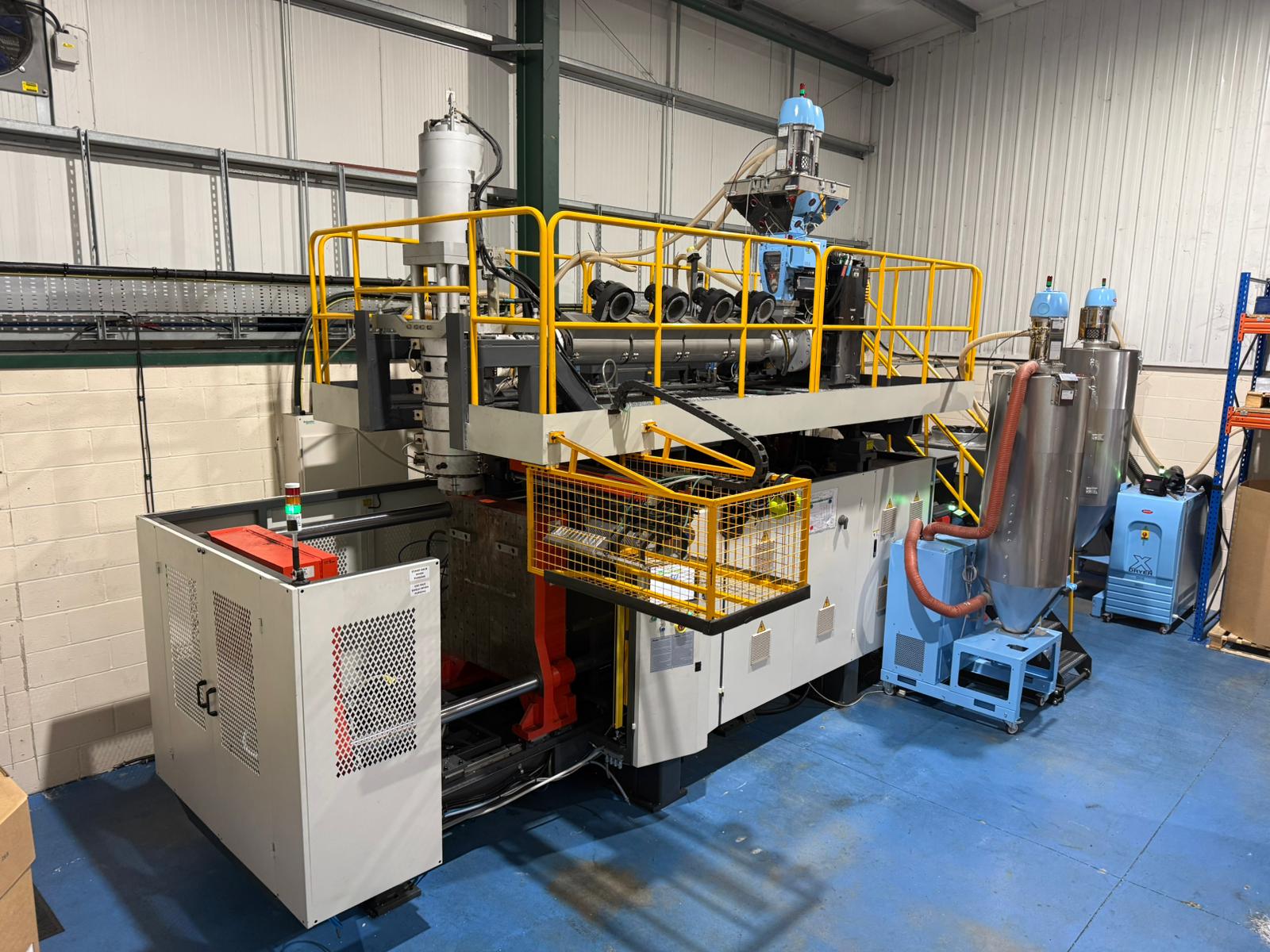
Gemini runs plastic blow moulding in-house for hollow parts, bottles and containers. We work in extrusion blow moulding, including co-extrusion for multi-layer walls, and injection stretch blow moulding for high-clarity PET. As a UK plastic container manufacturer we hold varying wall thickness, dose in additives, and take a part from tool through to production under one roof.
Why Gemini
Gemini runs plastic blow moulding in-house for hollow parts, bottles and containers, in extrusion blow moulding and injection stretch blow moulding, taking a part from tool through to production on one site.
Size range
200ml to 6.4L
Across our blow moulding machines, from small containers to larger vessels.
Wall structure
Multi-layer
Co-extrusion for barrier, recycled and coloured layers in one wall.
Tooling
P20 steel
Pre-toughened P20 tools, at a relatively low tooling cost for blow moulding.
Extrusion Blow Moulding
Extrusion blow moulding is a process of producing hollow plastic parts by melting plastic resin and extruding the plastic into a mould tool. Once the plastic is extruded through the machine it flows between the open two halves of a mould tool, which then shuts the plastic inside. The pressurised air is then pushed into the mould to form the shape of the tool cavity inside. Once it cools the mould is opened releasing the part so the process can be repeated.
EBM can be used for virtually any thermoplastics, from PP, HDPE, ABS, HIPS and PA6 to PETG. It allows for a high rate of production with relatively low tooling cost and can incorporate design features such as handles and co-extrusion multi-layers.
Injection Stretch Blow Moulding
It has always been our business to ensure we are meeting the needs of our customers and one key area we have identified is the manufacturing of injection stretch blow moulded parts. ISBM is a combination of injection moulding and blow moulding to produce very high quality and very high clarity precision bottles and containers.
First a preform is created via the injection moulding process; the preform is then placed in the ISBM machine and heated before being placed in the blow tool cavity.
The mould shuts and high-pressure air is injected where it stretches the preform vertically inside before being blown to fill the cavity. Once the blow cycle ends the tool opens to allow another preform to be loaded and the process can start again.
Clear, glossy PET bottles for drinks, cosmetics and household products, with the neck finish formed in the preform.
Biaxial orientation lets us reduce wall thickness and material use while holding strength and top-load performance.
Working from a stock preform, we can turn round sample bottles in as little as five days for review before committing to a dedicated tool.
Case Studies
Case Highlight
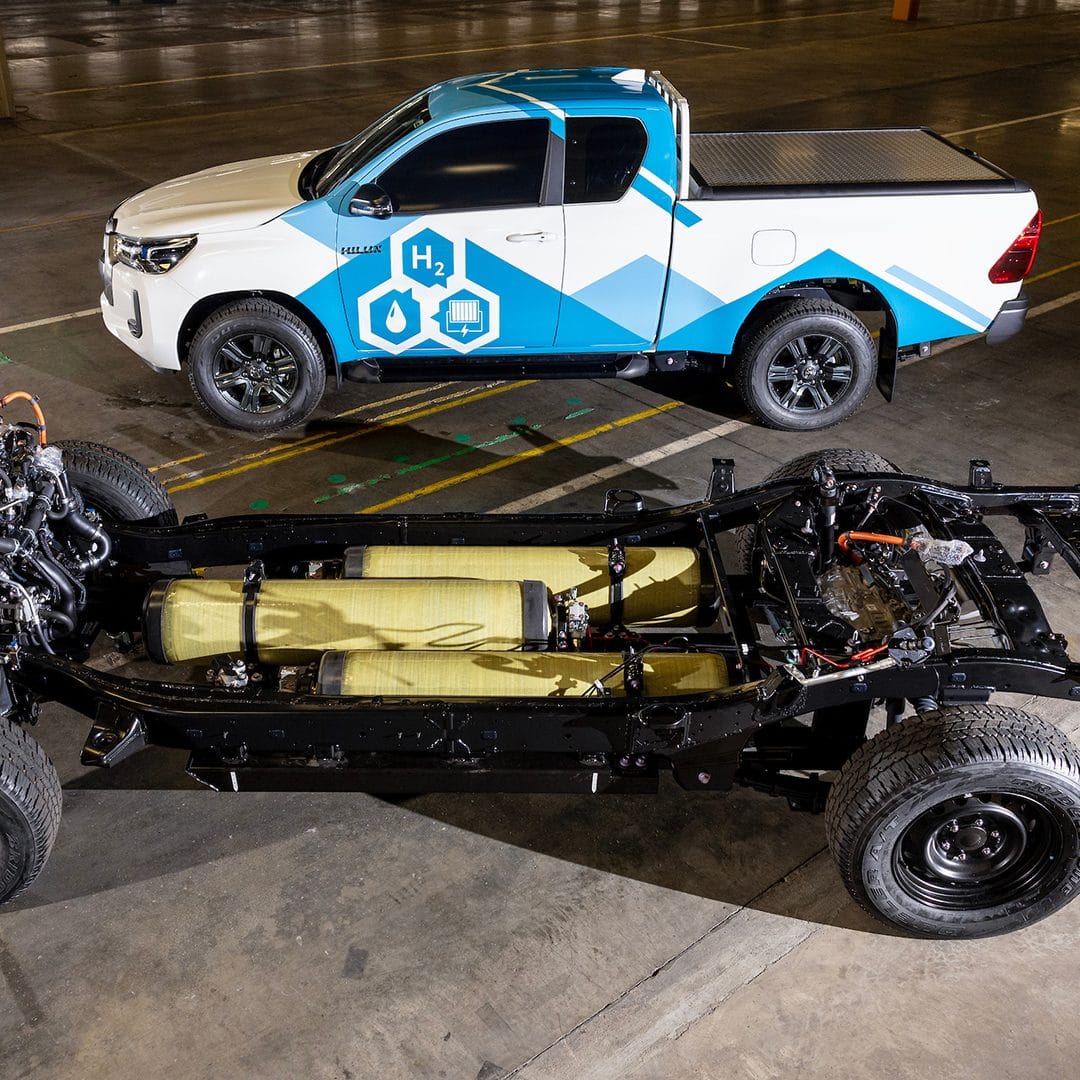
Blow moulded on the JWELL JWZ-BM50, with the process reworked to cut cycle time by 42%, down to a 70-second trimmed part. Moulded in nylon for hot-climate lanes and HDPE for cold.
The nominally prototype parts were treated by Toyota as if they were actual production parts, and performed very well throughout test and validation. The overall quality and timing have been very strong.
Inside Gemini
Send us details about your part and we'll get back to you within 24 hours.