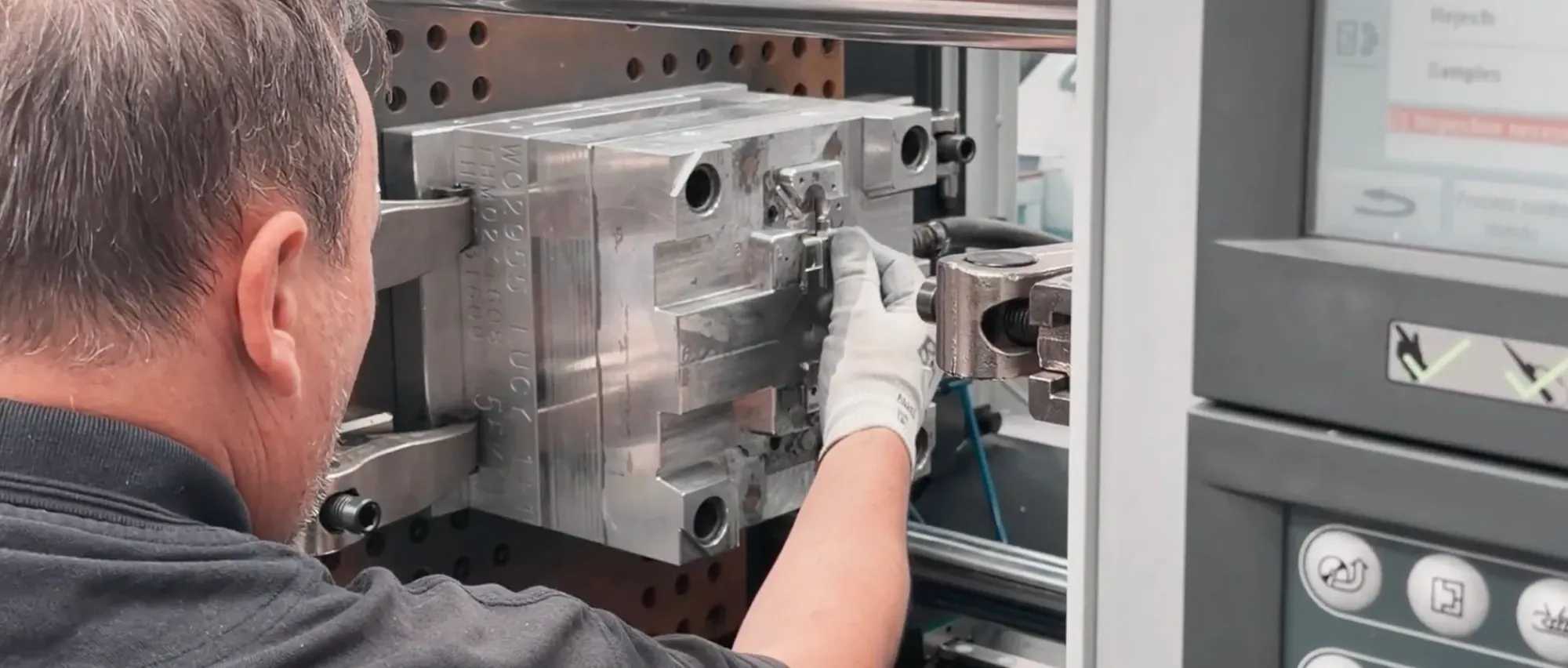
What is injection moulding?
Injection moulding is a manufacturing process used to produce accurate, repeatable plastic components. During the plastic injection moulding process, molten plastic is injected into a specially designed mould and allowed to cool into the required shape. Manufacturers can use the process for anything from complex, low-volume parts to large production runs.
The process involves a moulding machine which heats the selected plastic and injects it into a mould cavity under pressure. The material then cools and solidifies before the mould releases the part. The manufacturer can trim, machine, decorate or assemble the moulded component to complete the product.
Service providers such as Gemini incorporate plastic injection moulding into a wider manufacturing process that takes products from initial concept and design through to finished production runs of hundreds or thousands of parts.
What is the injection moulding process?
The injection moulding process follows seven main steps that take a part from initial idea to finished product. These stages are product design, mould creation, clamping, injection, cooling, ejection, and finishing and assembly. Below, we explain the injection moulding process step by step.
1. Product Design
The engineer converts the client’s drawings into a 3D model and assesses important factors such as wall thickness, draft angles, material flow and shrinkage.
2. Mould Creation
The manufacturer then produces the mould, typically from hardened steel or aluminium. The mould contains a cavity which is shaped like the desired product. This is typically the most expensive part of the entire injection moulding process. While you manufacture with Gemini, we cover the cost of maintaining and replacing your mould tool.
3. Clamping
The operator mounts the mould in the machine, and the clamping unit closes its two halves under high pressure.
4. Injection
Molten plastic is injected into the mould cavity, filling the mould.
5. Cooling
The plastic cools and solidifies inside the mould.
6. Ejection
The mould opens and ejector pins push the finished part out of the mould. The mould then closes and the cycle repeats. The full cycle can take seconds or minutes, depending on the component size, wall thickness and selected material.
7. Finishing and Assembly
Manufacturers with in-house finishing and assembly capabilities, such as Gemini, can trim, machine, decorate and assemble the moulded component to meet the final product specification.
What types of injection moulding are there?
The main types of injection moulding include thermoplastic moulding, insert moulding, overmoulding, two-shot moulding, liquid silicone rubber moulding and gas-assisted injection moulding. Each method works in a slightly different way and suits different materials, part designs and performance requirements.
Thermoplastic Moulding
Thermoplastic injection moulding is the most common form of injection moulding, where a thermoplastic material is heated until molten, then directly injected into a mould cavity to create a part.
Insert Moulding
Insert moulding places a separate component, such as a threaded metal insert, electrical contact or magnet, inside the mould before the plastic is injected. The plastic forms around the insert, creating a single integrated component.
Overmoulding
Overmoulding involves moulding one material over another. For example, a softer, rubber-like material may be moulded over a rigid plastic handle to improve grip, comfort and impact resistance.
Two-shot Moulding
Two-shot moulding uses two different materials or colours within the same production cycle. This can create components with contrasting colours, flexible sections, seals or integrated buttons without requiring separate assembly.
Liquid Silicone Rubber Moulding
Liquid Silicone Rubber Moulding (LSR Moulding) is used to manufacture flexible, heat-resistant and chemically resistant silicone components. Typical products include seals, medical parts, electrical connectors and food-grade items. Gemini specialises in LSR moulding for the medical industry.
Gas-assisted injection moulding
Gas-assisted injection moulding introduces pressurised gas into the molten plastic. The process creates hollow sections, reduces component weight and minimises visible sink marks in thicker parts.
Which injection moulding method is best for my product?
Get in touch with us and tell us about your part; we run many different types of injection moulding methods in-house and can tell you which one is best for you.
What materials are used for injection moulding?
Manufacturers select injection moulding materials based on the part’s required strength, heat resistance, chemical resistance, appearance and budget. Common materials include polypropylene, polyethylene, ABS, nylon, polycarbonate, acetal and acrylic. Specialist and high-performance materials can also be used for more complex or demanding applications.
The table compares the mechanical properties, heat performance, chemical resistance, appearance, density, applications and relative cost of common injection moulding materials. For a fuller treatment of each one, including how to choose between them, see our guide to injection moulding materials.
| Material | Mechanical properties | Heat performance | Chemical resistance | Appearance | Density | Typical applications | Relative cost |
|---|---|---|---|---|---|---|---|
| Nylon (PA6) | Tensile strength: ~85 MPa Modulus: ~3,200 MPa Strong, stiff and wear resistant |
Melting point: ~220°C HDT: ~76°C at 1.8 MPa |
Good against oils, greases and hydrocarbons; absorbs moisture | Opaque; usually cream or natural | ~1.13 g/cm³ | Gears, bearings, clips and under-bonnet parts | High |
| Polycarbonate (PC) | Modulus: ~2,300 MPa Exceptional impact resistance |
High-heat grades: HDT up to ~183°C at 0.45 MPa | Moderate; some solvents and alkalis cause stress cracking | Transparent, tinted or opaque | ~1.20 g/cm³ | Guards, lighting, medical housings and safety covers | High |
| Acetal (POM) | Rigid, dimensionally stable, low friction and wear resistant | HDT: up to ~100°C, depending on grade | Excellent against fuels, solvents and strong alkalis | Smooth, opaque and slightly glossy | ~1.39–1.42 g/cm³ | Gears, valves, bearings and precision parts | Mid-range |
| ABS | Tensile strength: ~45 MPa Modulus: ~2,300 MPa Impact strength: ~299 J/m |
HDT: ~78°C at 1.8 MPa | Limited against fuels, ketones and organic solvents | High gloss; easy to colour, paint or plate | ~1.04 g/cm³ | Housings, automotive trim, panels and appliances | Mid-range |
| Polyethylene (PE) | Flexible, lightweight and impact resistant; properties vary by grade | Generally low; varies between LDPE, LLDPE and HDPE | Good against many acids, alkalis and chemicals | Waxy; translucent or opaque | ~0.91–0.96 g/cm³ | Containers, caps, closures and flexible parts | Low |
| Polypropylene (PP) | Modulus: ~1,100–1,900 MPa Flexible with excellent fatigue resistance |
HDT: ~70–105°C at 0.45 MPa Vicat: ~127–155°C |
Very good against acids, alkalis and chemical solutions | Translucent or opaque; matte to glossy | ~0.89–0.91 g/cm³ | Living hinges, packaging, caps and automotive trim | Low |
| HDPE | Tensile strength: ~24 MPa Modulus: ~850 MPa Tough and stiffer than LDPE |
Melting point: ~130°C HDT: ~70°C at 0.45 MPa |
Very good; strong stress-crack resistance | Opaque with a waxy or matte finish | ~0.94–0.97 g/cm³ | Chemical containers, valves and fluid-handling parts | Low |
| Acrylic (PMMA) | Modulus: ~1.5–3.2 GPa Rigid but less impact resistant than PC |
Vicat: ~90–105°C | Moderate; limited against ketones, aromatic solvents and some alcohols | Clear, high gloss; light transmission often above 90% | ~1.08–1.19 g/cm³ | Lenses, displays, lighting and transparent covers | Mid-range to high |
What are the applications of injection moulding?
Injection moulding can be used to manufacture both simple and highly technical products. Common applications include caps, containers, handles, clips, fasteners, casings, switches, plugs, brackets, gears and protective covers. Specialist manufacturers like Gemini Manufacturing can also use the process for lower-volume, higher-complexity parts that require consistent dimensions or repeatable performance.
Manufacturers can incorporate decorative textures, branding and identification markings into the mould tool, which transfers them to each finished component.
What industries can injection moulding be used for?
Injection moulding is used across industries including automotive, medical and healthcare, electronics, packaging, construction, aerospace, agriculture, telecommunications, consumer goods, food production and industrial machinery. Applications range from dashboards and medical-device housings to electrical connectors, packaging closures, irrigation fittings and precision machinery components.
| Industry | Example applications |
|---|---|
| Automotive | Dashboards, clips, connectors, vents, lighting components, fluid reservoirs and interior trim |
| Medical and healthcare | Diagnostic equipment, syringe components, device housings, laboratory products and disposable medical items |
| Electronics | Plugs, sockets, switches, cable-management components, connectors and protective enclosures |
| Packaging | Caps, closures, tubs, containers, dispensers and tamper-evident components |
| Construction | Pipe fittings, electrical boxes, fixings, handles, protective covers and insulation components |
| Aerospace | Lightweight interior fittings, clips, housings, connectors and precision components |
| Agriculture | Irrigation fittings, equipment housings, trays, clips, handles and machinery covers |
| Telecommunications | Cable connectors, network housings, sockets, terminal components and equipment enclosures |
| Consumer goods | Toys, kitchenware, storage products, appliance housings and personal-care packaging |
| Food production | Food-grade containers, utensils, caps, dispensers and processing-equipment components |
| Industrial machinery | Gears, guards, control knobs, handles, seals, housings and other engineered components |
When should I use injection moulding vs. other plastic moulding methods?
Injection moulding suits projects that require consistent dimensions, production-grade materials, complex parts and repeatable performance. Although commonly associated with medium- and high-volume production, it can also work well for complex, low-volume projects. Other moulding methods may suit hollow products, shallow parts, prototypes or specialist materials better.
Low-volume injection moulding is particularly useful for bridge production, product launches, specialist components, replacement parts and applications where 3D printing cannot provide the required strength, finish, accuracy or material performance. Using aluminium tooling, simplified mould designs or single-cavity tools can also reduce the initial investment for smaller production runs.
Blow moulding is generally more suitable for hollow products such as bottles, tanks and containers. Rotational moulding often suits large hollow components produced in lower volumes, including storage tanks and outdoor equipment.
Thermoforming can be cost-effective for large, relatively shallow components made from plastic sheet. Compression moulding may suit thermoset plastics, rubber components and fibre-reinforced materials.
The best method depends on tooling cost, production volume, part complexity, material requirements, tolerances, surface finish and expected product lifespan. For complex parts that require production-quality performance, low-volume injection moulding can offer a practical middle ground between prototyping and full-scale manufacture.
If you have a part you want to prototype or manufacture but aren’t sure of the best moulding method, contact us and we can let you know.
How to get started with injection moulding
To begin the injection moulding procedure, send us your drawings or 3D model, expected quantities, material requirements and intended application. We will review the information, contact you within 24 hours if we need any clarification and recommend the next step with clear pricing.
Injection moulding FAQs
How does injection moulding work?
Injection moulding works by heating plastic until it becomes molten and injecting it under pressure into a shaped mould cavity. The material then cools and solidifies before the mould opens and ejector pins release the finished component.
Is injection moulding suitable for low-volume production?
Yes. Injection moulding can suit low-volume projects when the component has complex geometry, requires consistent dimensions or must use a production-grade material.
Gemini specialises in low-volume injection moulding for niche and technically demanding applications. Projects can include prototypes, bridge production, replacement parts, specialist components and initial production runs before volumes increase.
What is the minimum order quantity for injection moulding?
Gemini can support production runs starting from as few as five parts.
The practical minimum depends on the component design, material, tooling requirements and expected future demand. Gemini assesses each project individually and recommends a tooling and production approach that suits the required quantity.
How much does an injection mould cost?
Injection mould costs vary significantly between projects, so Gemini provides quotations based on the individual component.
The main cost factors include:
- component size and complexity;
- mould material;
- number of cavities;
- required tolerances;
- surface finish;
- inserts, slides and moving features;
- anticipated production volume.
Low-volume projects may use aluminium or simplified tooling to reduce the initial investment. Longer production runs may justify more durable steel tooling or multi-cavity moulds.
How long does it take to create an injection mould?
The lead time depends on the size and complexity of the component, the tooling material and the required production volume.
A simple low-volume mould will generally take less time to produce than a complex multi-cavity steel tool. Gemini manufactures tooling in-house, allowing its team to design, machine, trial and adjust the mould within the same UK facility.
Gemini will provide a project-specific lead time after reviewing the component details.
Can injection moulding produce complex parts?
Yes. Injection moulding can produce detailed components with tight tolerances, complex geometry and integrated features.
These features can include:
- ribs and strengthening structures;
- clips and fixing points;
- threaded or metal inserts;
- seals and flexible sections;
- textured surfaces;
- branding and identification marks;
- multiple materials or colours.
Gemini configures its tooling, machinery and production processes for complex, low-volume components across specialist industries.
Which materials can Gemini mould?
Gemini works with a broad range of common injection moulding materials, including:
- polypropylene;
- polyethylene;
- HDPE;
- ABS;
- nylon;
- polycarbonate;
- acetal;
- acrylic.
Gemini also has experience with specialist and high-performance materials for demanding applications, as well as liquid silicone rubber for flexible, heat-resistant and chemically resistant components.
The most suitable material depends on the component's strength, flexibility, temperature resistance, chemical exposure, appearance and regulatory requirements.
What files are needed for an injection moulding quotation?
Gemini can begin reviewing a project from a concept, physical sample, technical drawing or 3D model.
Where available, send:
- STEP or IGES files;
- 2D technical drawings;
- material requirements;
- expected order quantity;
- estimated annual volume;
- dimensional tolerances;
- surface-finish requirements;
- intended application;
- assembly or finishing requirements.
Providing more information at the start helps Gemini assess manufacturability, recommend the most suitable process and prepare an accurate quotation.