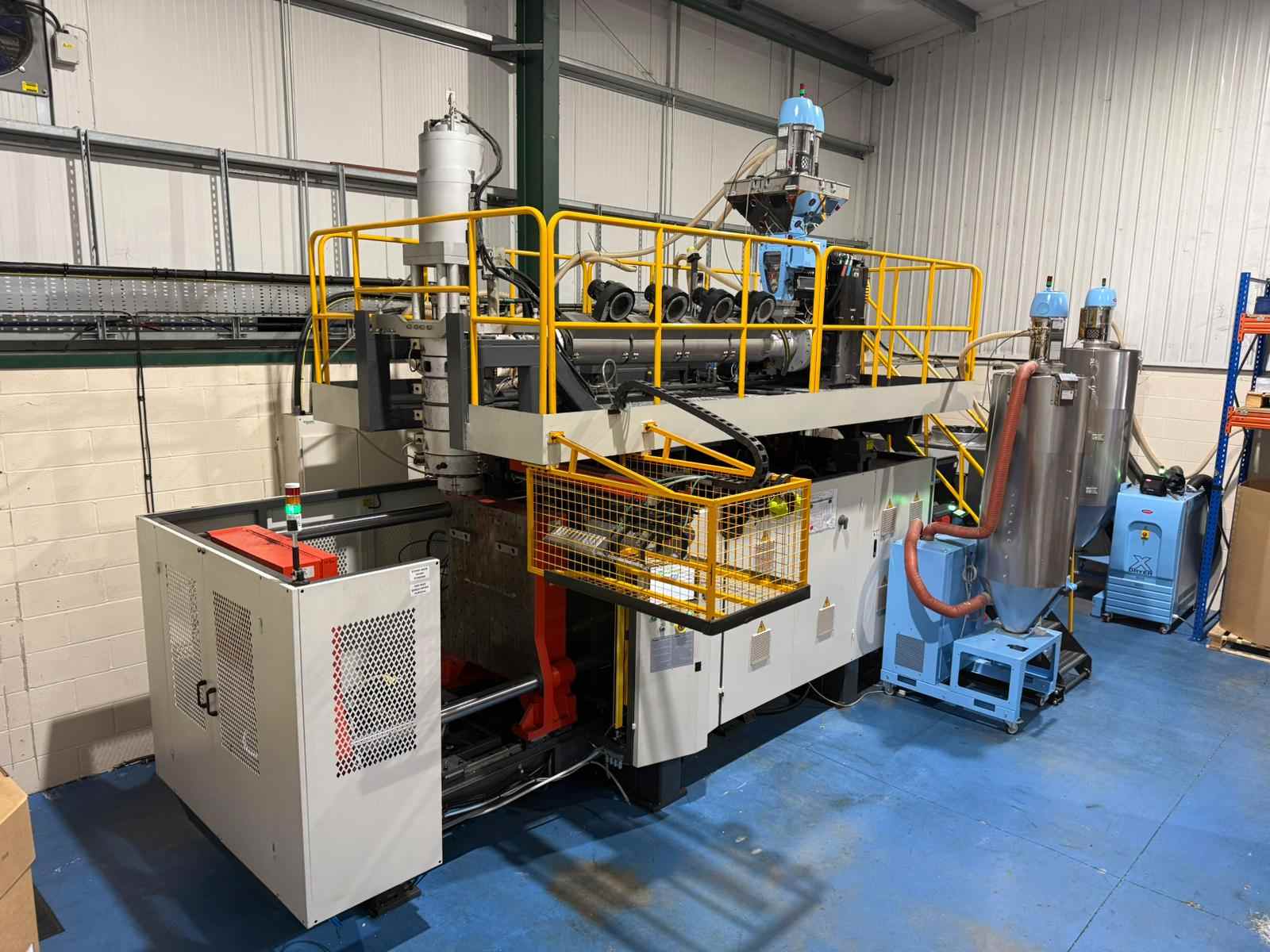
What is blow moulding?
Blow moulding is a manufacturing process used to produce hollow plastic components such as bottles, containers, automotive ducts and industrial parts. The process uses compressed air to expand heated plastic against the inside of a mould, creating the required shape.
The plastic begins as either a tube-like parison or a preform, depending on the type of blow moulding used. Once the plastic has expanded to match the mould cavity, it cools and solidifies before the mould opens and releases the finished component.
Gemini specialises in the development of blow moulded components and can produce mouldings in a range of sizes, materials and colours. We also have the capacity to produce multi-layer components and can support projects from tooling through to production.
How does the blow moulding process work?
The blow moulding process forms hollow plastic components by heating the material, shaping it into a parison or preform, and using compressed air to expand it against the inside of a mould. Once the plastic has cooled and solidified, the mould opens and releases the finished part.
For extrusion blow moulding, the process usually follows these stages:
Material preparation
The selected plastic material is prepared for moulding. Gemini can work with a range of thermoplastics, depending on the strength, flexibility, chemical resistance and performance required from the finished component.
Extrusion
The blow moulding machine heats the plastic until it becomes soft enough to form then extrudes the heated plastic into a hollow tube called a parison.
Mould closing
The mould closes around the parison and seals it in position.
Blowing
Compressed air is blown into the parison, causing it to expand against the walls of the mould cavity and take on the required shape.
Cooling
The plastic cools and solidifies inside the mould.
Ejection and trimming
The mould opens and releases the finished component. Any excess material is then trimmed where required.
Inspection and finishing
Gemini can inspect, trim and prepare the component for further production stages. Because design, tooling and manufacturing are handled in-house, any required changes can be made without moving the project between separate suppliers.
What types of blow moulding are there?
The main types of blow moulding include extrusion blow moulding, injection blow moulding, and injection stretch blow moulding. Each process forms hollow plastic components differently and suits different materials, part sizes, production volumes and finish requirements.
Extrusion blow moulding
Extrusion blow moulding forms heated plastic into a hollow tube called a parison. The mould closes around the parison before compressed air expands it against the mould cavity. Gemini uses extrusion blow moulding to produce hollow components in a range of materials, colours and sizes.
Injection blow moulding
Injection blow moulding begins by injection moulding a preform around a core pin. The preform is transferred into a blow mould, where compressed air expands it into the required shape. This process commonly produces smaller bottles and containers with accurate neck finishes.
Injection stretch blow moulding
Injection stretch blow moulding combines injection moulding and blow moulding to produce clear, precise bottles and containers. The process first creates a preform through injection moulding. The preform is then reheated, stretched and expanded inside the blow mould using compressed air.
What materials are used for blow moulding?
Blow moulding can use a wide range of thermoplastic materials, depending on the strength, flexibility, chemical resistance, temperature performance and appearance required from the finished component. Common options include HDPE, LDPE, PET, PETG, polypropylene, nylon, ABS, acetal and EVA.
Gemini works with customers to select the most suitable material based on the component’s intended use, operating environment and mechanical requirements. The right choice helps ensure the finished part performs as intended without becoming unnecessarily expensive or over-engineered.
| Material | Main properties | Typical blow moulding applications |
|---|---|---|
| HDPE | Strong, lightweight and chemically resistant | Bottles, containers, tanks and industrial parts |
| LDPE | Flexible, lightweight and impact resistant | Squeezable bottles and flexible containers |
| PET | Clear, strong and lightweight | Drinks bottles and high-clarity packaging |
| PETG | Clear, durable and easier to process than some PET grades | Medical, cosmetic and specialist containers |
| Polypropylene (PP) | Lightweight with good fatigue and chemical resistance | Containers, closures and technical hollow parts |
| Nylon (PA) | Strong, wear resistant and temperature resistant | Automotive and industrial components |
| ABS | Rigid, impact resistant and easy to finish | Housings, ducts and technical mouldings |
| Acetal (POM) | Strong, dimensionally stable and chemically resistant | Precision hollow components |
| EVA | Flexible, soft and impact resistant | Squeezable or flexible specialist products |
What products can be made using blow moulding?
Blow moulding is commonly used to produce hollow plastic products such as bottles, containers, ducts, tanks and specialist industrial components. Gemini uses the process for components ranging from very small parts up to approximately 50 litres, depending on the design, material and production requirements of the project.
Typical blow moulded products include:
- plastic bottles
- packaging containers
- automotive ducts and air channels
- tanks and reservoirs
- large hollow industrial parts
- smaller specialist components
- lightweight, durable structures that require a hollow internal form
Gemini’s investment in the JWZ-BM50 blow moulding machine has increased its capacity for larger and more demanding mouldings, while allowing production to remain in-house in the UK. Our focus on complex, lower volume manufacturing runs also means we are comfortable with combining blow moulding and injection moulding to create more niche products that larger manufacturers often turn down.
What industries use blow moulding?
Blow moulding is used across industries that require lightweight, durable and hollow plastic components. Gemini supports projects in sectors including automotive, defence, aerospace, pharmaceutical packaging, commercial packaging and specialist industrial manufacturing, producing parts from initial prototypes through to repeat production.
| Industry | Example applications |
|---|---|
| Automotive | Ducts, air channels, reservoirs and other hollow technical components |
| Defence | Specialist containers, housings and durable hollow components |
| Aerospace | Lightweight ducts, containers and technical mouldings |
| Pharmaceutical packaging | Bottles, containers and specialist packaging components |
| Commercial packaging | Bottles, containers, dispensers and shaped packaging |
| Industrial manufacturing | Tanks, ducts, large hollow parts and specialist components |
| Product development | Prototype and low-volume parts for new products and specialist applications |
Gemini’s range of blow moulding machinery allows it to produce components from very small parts up to approximately 50 litres, depending on the design, material and project requirements.
What are the advantages of blow moulding?
Blow moulding offers several advantages for producing hollow plastic components, including lower tooling costs, efficient material use, lightweight construction and relatively fast production cycles. It can also create thin-walled shapes and hollow geometries that would be difficult or more expensive to produce using injection moulding.
Key advantages include:
Lower tooling investment
Blow mould tools generally require a cavity rather than both cavity and core tooling, which can reduce the initial cost compared with injection moulding.
Suitable for lower volumes
Reduced tooling costs can make blow moulding more practical when production quantities are not high enough to spread the cost of expensive tooling across a large run.
Lightweight hollow parts
The process can produce strong, hollow components with relatively thin walls, helping reduce overall material use and part weight.
Efficient material use
Gemini operates an on-site plastic grinder, allowing scrap from production to be reprocessed and reused where suitable.
Flexible production
Gemini can produce mouldings in different materials, colours and sizes, including multi-layer components.
In-house development
Gemini handles design, engineering development and tooling on-site, helping reduce lead times and avoid moving the project between separate suppliers.
Injection moulding and blow moulding: what is the difference?
Injection moulding and blow moulding both use heated plastic and mould tooling, but they produce different types of components. Injection moulding is generally used for solid or detailed parts, while blow moulding is used for hollow products such as bottles, containers, ducts and tanks.
| Factor | Blow moulding | Injection moulding |
|---|---|---|
| Main product type | Hollow plastic components | Solid or detailed plastic components |
| How the part is formed | Compressed air expands a parison or preform against the mould cavity | Molten plastic is injected into a mould cavity under high pressure |
| Typical products | Bottles, containers, ducts, tanks and hollow industrial parts | Caps, gears, connectors, housings and precision components |
| Tooling | Usually requires cavity tooling rather than cavity-and-core tooling | Usually requires both cavity and core tooling |
| Wall thickness | Suitable for thin-walled, lightweight hollow parts | Better suited to thicker sections, detailed features and tight tolerances |
| Tooling investment | Generally lower than injection moulding | Generally higher due to more complex tooling |
| Production volumes | Can suit low- and medium-volume hollow components | Commonly used for medium- and high-volume production, although Gemini also supports low-volume work |
| Main advantage | Produces hollow shapes efficiently with relatively low material use | Produces complex, accurate and repeatable components |
Blow moulding can produce hollow, lightweight parts with thinner walls than injection moulding. Because blow mould tooling generally requires a cavity rather than cavity-and-core tooling, it can also involve a lower initial tooling investment and suit lower-volume production.
Injection moulding is generally more suitable when a component requires detailed geometry, thicker wall sections, tight tolerances or integrated features. Gemini offers both processes in-house and can recommend the most suitable option based on the component design, material, production volume and required performance.
When should I use blow moulding?
Blow moulding is a strong option when a product needs to be hollow, lightweight and durable. It is particularly suitable for bottles, containers, ducts, tanks and industrial components where the part requires a consistent internal cavity, relatively thin walls or a shape that would be difficult to produce using injection moulding.
It can also suit lower-volume production because blow mould tooling generally requires a cavity rather than both cavity and core tooling. This can reduce the initial investment and make the process more practical where production quantities are not high enough to spread the cost of more complex tooling across a large run.
Blow moulding may be the right choice when the project requires:
- a hollow component
- lower wall thickness
- lightweight construction
- an integrated handle or shaped neck
- lower tooling costs
- multi-layer materials
- recycled content
- specialist colours or additives
- low- or medium-volume production
The most suitable process depends on the component size, material, shape, wall thickness, clarity requirements, production volume and expected performance. Gemini can review the design and recommend whether extrusion blow moulding, injection stretch blow moulding or another manufacturing method is the best fit. Get in touch to find out.
How to get started with blow moulding
To begin a blow moulding project, send us details of your required part, along with the expected production quantity and intended application. We can then review the design, material requirements and manufacturing needs before recommending the most suitable process.
Gemini can support the project from design and tooling through to trials and production. Because the design, engineering development, tooling and manufacturing stages are handled in-house, the team can identify potential issues early and make any required changes before full production begins.
Once the project requirements are clear, Gemini can provide a quotation, tooling recommendation and realistic production lead time.
Blow moulding FAQs
Is blow moulding suitable for low-volume production?
Yes. Blow moulding can suit low-volume production because the tooling generally requires a cavity rather than both cavity and core tooling. This can reduce the initial investment compared with injection moulding and make the process more practical where production quantities are lower.
Gemini can support projects from prototype and sample parts through to repeat production, with design, tooling, trials and manufacturing handled in-house.
What is a parison?
A parison is a hollow tube of heated plastic used in extrusion blow moulding. The mould closes around the parison before compressed air expands it against the mould cavity to create the required shape.
What is the difference between a parison and a preform?
A parison is an extruded tube of softened plastic used in extrusion blow moulding. A preform is a separately moulded part, usually created through injection moulding, which is reheated and expanded inside a blow mould.
Gemini uses preforms as part of its injection stretch blow moulding process for high-quality, high-clarity bottles and containers.
What size parts can Gemini blow mould?
Gemini can produce blow moulded components from very small parts up to approximately 50 litres. The final size depends on the component design, material, tooling and selected blow moulding process.
Its investment in the JWZ-BM50 increased maximum part volume by 250%, allowing larger and more demanding mouldings to be produced in-house.
Which materials can Gemini use for blow moulding?
Gemini can work with a wide range of thermoplastic materials, including:
- HDPE
- LDPE
- PET
- PETG
- polypropylene
- nylon
- ABS
- acetal
- EVA
The most suitable material depends on the component's operating environment, mechanical requirements, chemical resistance, appearance and expected performance.
How much does a blow mould cost?
The cost of a blow mould depends on the component size, shape, tooling material, production volume and level of complexity.
Blow mould tooling generally requires cavity tooling rather than both cavity and core tooling, so the initial investment can be lower than injection moulding. Gemini provides a project-specific quotation after reviewing the design and manufacturing requirements.
Can blow moulded parts include handles?
Yes. Blow moulding can produce hollow components with integrated features such as handles, shaped necks and complex external forms, depending on the part design and tooling.
The design must still allow the parison or preform to inflate evenly and maintain the required wall thickness throughout the component.
Can Gemini produce multi-layer blow moulded parts?
Yes. Gemini has the capacity to produce multi-layer blow moulded components. Different layers can support requirements such as colour, recycled content, barrier properties or specialist additives.
The exact layer structure will depend on the material, product design and performance requirements.
Can recycled plastic be used in blow moulding?
Yes, recycled plastic can be used where the material and product requirements allow it. Gemini operates an on-site plastic grinder, allowing suitable scrap material generated during production to be reprocessed and reused.
Whether recycled content is suitable depends on the material specification, appearance, performance and any regulatory requirements applying to the finished product.
What files are needed for a blow moulding quotation?
Gemini can begin reviewing a project from a concept, physical sample, technical drawing or 3D model.
Where available, provide:
- STEP or IGES files
- 2D technical drawings
- required part volume or capacity
- expected order quantities
- preferred material
- colour and finish requirements
- wall-thickness requirements
- intended operating environment
- any multi-layer, recycled-content or additive requirements
- trimming, finishing or assembly requirements
Providing more information at the start helps Gemini assess manufacturability, recommend the most suitable process and prepare an accurate quotation.