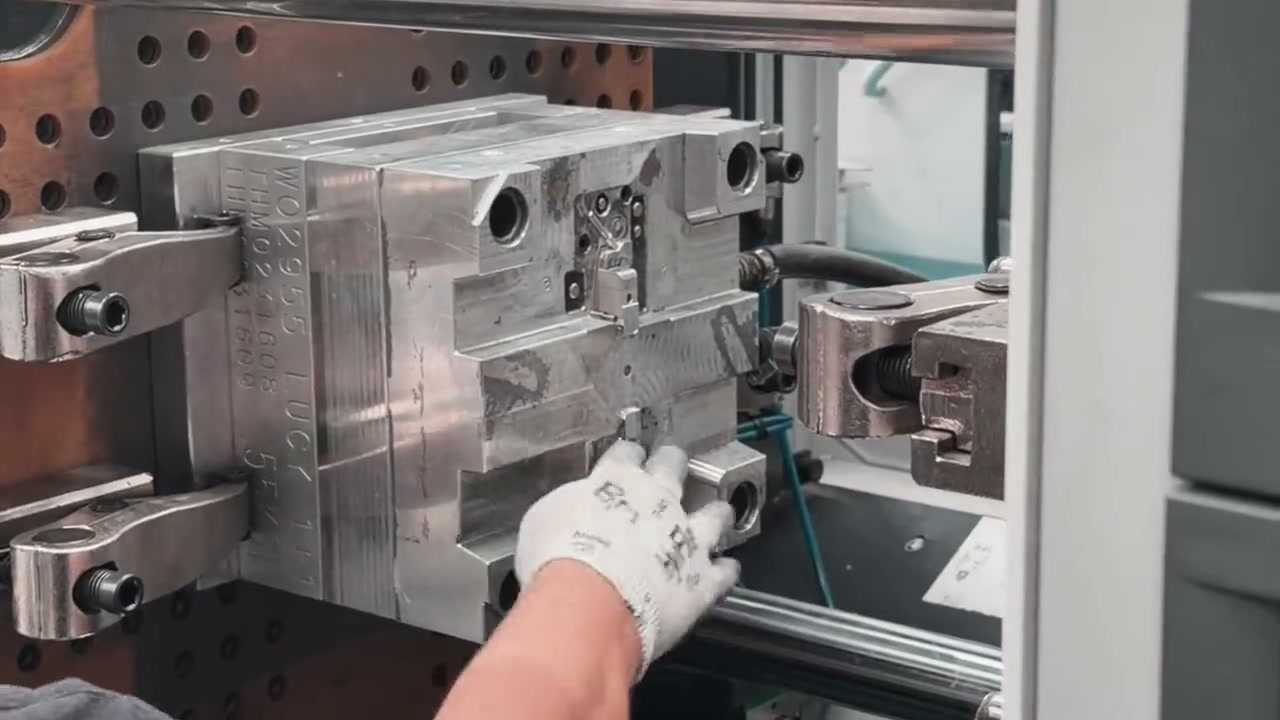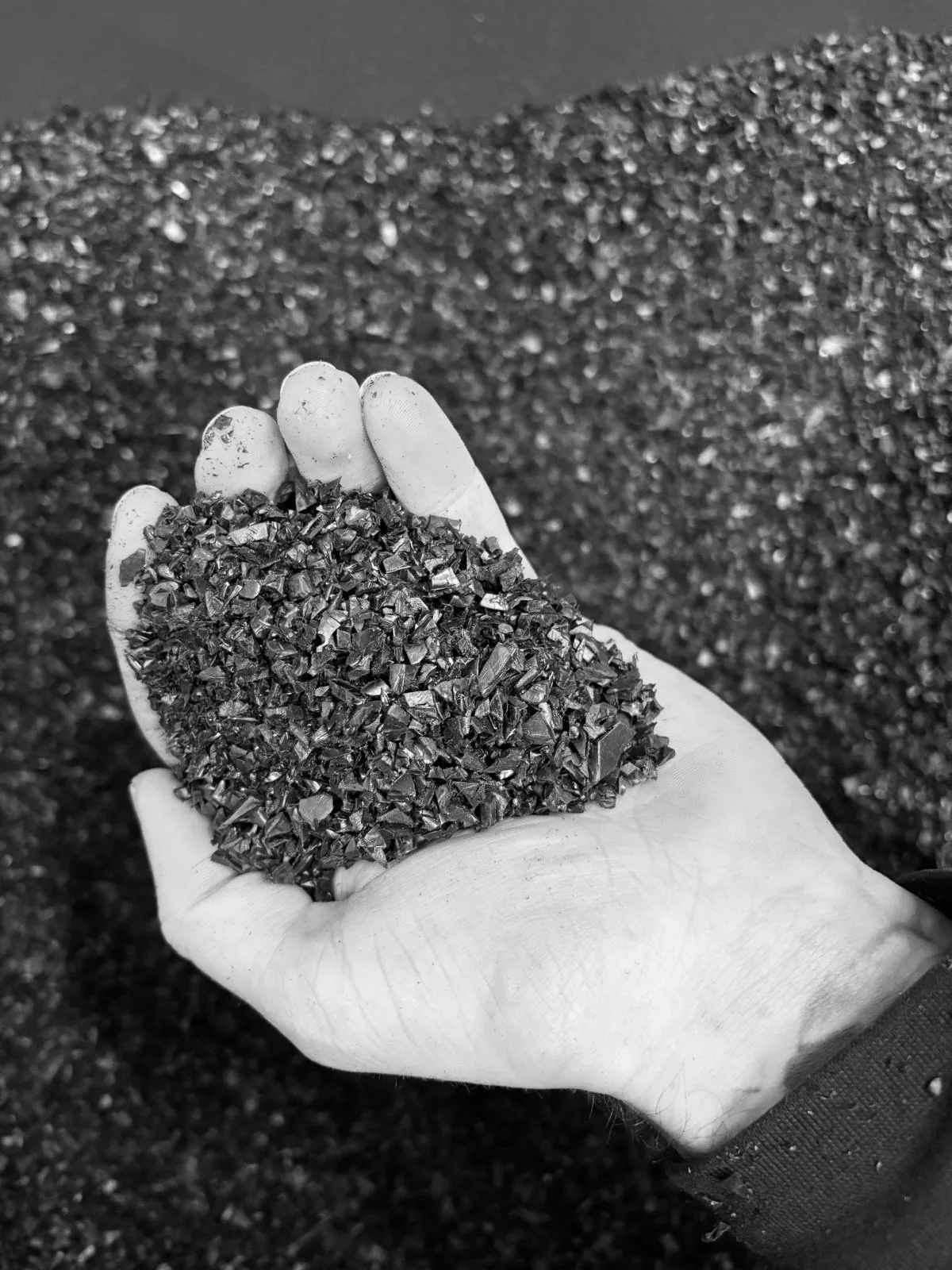
Common injection moulding plastics include ABS, polypropylene, polycarbonate, nylon, acetal, polyethylene and acrylic. The right choice depends on the part: the load it will carry, the temperatures and chemicals it will encounter, the finish required and the number of parts being produced. Material choice can also affect the mould tool, cycle time and final part cost.
Injection moulding materials covered in this guide
- Acrylonitrile Butadiene Styrene (ABS)
- Polypropylene (PP)
- Polycarbonate (PC)
- Polyamide (Nylon, PA)
- Polyoxymethylene (POM / Acetal)
- High-density polyethylene (HDPE)
- Polyethylene (PE), including LDPE
- Acrylic (PMMA)
- Thermoplastic polyurethane (TPU)
What materials can be used for injection moulding?
Most injection moulded components are made from thermoplastics. These materials soften when heated and solidify again as they cool. ABS, polypropylene, polycarbonate, nylon, acetal, polyethylene and acrylic are all widely used, with different grades available for each to change properties such as stiffness, impact strength, heat resistance and flow.
The material needs to suit the job the component will do. A cosmetic housing has different requirements from a gear carrying a mechanical load. A clear lens needs different properties from a part exposed to oils, cleaning products or outdoor weather. The operating conditions should therefore be understood before a resin grade is chosen.
Material selection also affects manufacturing. Shrinkage, flow, moisture absorption and the use of fillers or reinforcement can change the way a part and its mould tool need to be designed.
For low-volume work, the production quantity matters too. Gemini produces runs from as few as five parts, so material choice can be considered alongside tooling cost and the expected life of the product rather than treating the resin as a separate decision.
Injection moulding materials compared
The table below gives a practical comparison of the main plastic injection moulding materials, covering their typical strengths, limitations and applications. The ratings describe typical unfilled grades and are intended to help narrow the options rather than replace a material datasheet. Reinforcement, additives and individual resin grades can change the properties considerably.
| Material | Rigidity / strength | Impact resistance | Heat resistance | Chemical resistance | Common reason for choosing it | Typical applications |
|---|---|---|---|---|---|---|
| ABS | Medium | High | Moderate | Moderate | Good balance of toughness, rigidity and surface finish | Housings, enclosures, automotive trim, consumer products |
| Polypropylene (PP) | Low to medium | Moderate to high, depending on grade | Moderate | High against many chemicals | Low weight, repeated flexing and chemical resistance | Living hinges, closures, containers, automotive parts |
| Polycarbonate (PC) | High | Very high | High | Variable | High impact strength with transparent grades available | Guards, covers, lenses, housings, electrical parts |
| Nylon (PA) | High | Moderate, grade and conditioning dependent | High | Good against many oils and fuels | Strength, wear resistance and mechanical performance | Gears, clips, bearings, mechanical components |
| POM / Acetal | High | Moderate | Moderate | Good | Low friction and good dimensional stability | Gears, bushes, moving mechanisms, precision parts |
| HDPE | Low to medium | High | Low to moderate | High against many chemicals | Toughness, low moisture absorption and low weight | Containers, pails, industrial parts, closures |
| LDPE | Low | High flexibility and toughness | Low | High against many chemicals | Softness and flexibility | Lids, closures and flexible mouldings |
| Acrylic (PMMA) | High rigidity | Moderate | Moderate | Variable | Optical clarity, surface hardness and weather resistance | Lenses, displays, light covers, automotive lighting |
| TPU | Grade dependent | High | Grade dependent | Grade dependent | Elasticity and abrasion resistance | Grips, seals and flexible protective components |
These ratings are intended as a guide only. Exact performance varies by grade, additives, reinforcement and operating conditions, so the final material choice should be checked against the technical data for the specific resin being considered. Contact us and we will analyse your part in detail and recommend the best material to use depending on its needs.
Common injection moulding plastics
Acrylonitrile Butadiene Styrene (ABS)
ABS is a rigid thermoplastic commonly used for housings, enclosures, automotive trim and consumer products. It combines useful impact resistance with a good moulded surface and can be painted, printed, textured or metallised where appearance matters.
ABS suits parts that need to feel rigid and robust while maintaining a good cosmetic finish. It is often a practical choice for covers, control housings and other components that will be handled regularly but do not need the higher heat or impact performance of materials such as polycarbonate.
Temperature, outdoor exposure and contact with chemicals should be checked against the chosen grade before ABS is specified. Surface coatings also need suitable solvents because incompatible systems can cause stress cracking.
Gemini moulds ABS in-house and can take a component through tooling, moulding, finishing and assembly where those stages are required.
Read more about our ABS injection moulding services.
Polypropylene (PP)
Polypropylene is a lightweight thermoplastic used for products including closures, containers, automotive components and technical mouldings. Its low density, chemical resistance and ability to flex repeatedly make it particularly useful where weight or movement matters.
PP is commonly used for living hinges because thin sections can withstand repeated bending without a separate hinge component. It can also suit parts exposed to detergents and many other chemicals.
The grade matters. Homopolymer PP generally offers greater stiffness, while copolymer grades can be selected where improved impact behaviour is needed. Other PP grades are formulated around different balances of flow, stiffness and toughness.
PP has lower rigidity and heat performance than several engineering thermoplastics. A component carrying a substantial mechanical load or operating at higher temperatures may need nylon, acetal, polycarbonate or another engineering material instead.
Polycarbonate (PC)
Polycarbonate is a rigid engineering thermoplastic used where high impact resistance, heat performance or transparency are important.
PC is a good choice for components that need to withstand knocks without cracking, particularly where a clear material is also required. Transparent grades can provide high light transmission while retaining much greater impact resistance than acrylic.
Typical uses include protective covers, electrical housings, lighting components, lenses and automotive parts.
The trade-off is cost and processing. Polycarbonate is more expensive than commodity plastics such as polypropylene, and it must be dried properly before moulding because absorbed moisture can affect the finished part. Chemical exposure also needs to be checked carefully, as some solvents and cleaning agents can cause stress cracking.
Polyamide (Nylon, PA)
Nylon is an engineering thermoplastic used where strength, wear resistance and heat performance matter. It is commonly specified for moving or mechanically loaded parts, and reinforced grades can provide much greater stiffness than unfilled nylon.
Nylon is a good option for parts exposed to repeated movement, friction or mechanical load. It also performs well around many oils and fuels, which is why it is widely used in automotive and industrial applications.
Typical uses include gears, bearings, clips, bushes, housings and under-bonnet components.
Moisture absorption is an important consideration. Nylon can absorb water from the surrounding environment, which can change its stiffness, dimensions and mechanical properties.
Polyoxymethylene (POM / Acetal)
POM, also known as acetal, is a stiff engineering thermoplastic with low friction, good wear resistance and strong dimensional stability. It is particularly useful for parts that move against another surface or need to hold tight tolerances during repeated use.
POM is a good choice for precision mechanical parts where smooth movement, low wear and consistent dimensions matter. Its low moisture absorption also helps it remain stable in service.
Typical uses include gears, bushes, bearings, rollers, clips and other moving mechanisms.
Different grades are available for higher stiffness, lower friction or improved wear performance, so the grade should be matched to the loads, movement and working environment of the part.
High-Density Polyethylene (HDPE)
HDPE is a lightweight thermoplastic with good toughness, chemical resistance and low moisture absorption. It is commonly used where a part needs to withstand regular handling or contact with water, cleaning products or other chemicals.
HDPE is a good option for moulded parts that need durability without much weight. It also offers good resistance to environmental stress cracking, although the level varies by grade.
Typical uses include caps, closures, containers, packaging components and other industrial mouldings.
Its main limitation is lower stiffness and heat resistance than engineering plastics such as nylon, POM or polycarbonate, so it is less suitable for heavily loaded or high-temperature parts.
Polyethylene (PE), including Low-Density Polyethylene (LDPE)
Polyethylene (PE) covers several grades with different levels of stiffness and flexibility. Low-density polyethylene (LDPE) is softer and more flexible than high-density polyethylene (HDPE), with good chemical resistance and easy processing.
LDPE suits parts where flexibility, low weight and resistance to everyday chemicals matter more than rigidity or heat performance.
Typical uses include lids, closures, containers and other flexible moulded parts.
Its lower stiffness and heat resistance limit its use in structural or heavily loaded components.
Polymethyl Methacrylate (PMMA)
Polymethyl methacrylate (PMMA), commonly known as acrylic, is a rigid thermoplastic valued for optical clarity, surface hardness and weather resistance.
PMMA suits visible or transparent parts where clarity and appearance are more important than very high impact resistance.
Typical uses include lenses, displays, light covers, optical components and automotive lighting.
Its impact resistance is lower than materials designed for heavy impact loads, so applications exposed to repeated knocks may need an impact-modified grade or another material.
Thermoplastic Polyurethane (TPU)
Thermoplastic polyurethane (TPU) is a flexible thermoplastic elastomer used where elasticity, abrasion resistance and repeated movement are important. Grades vary considerably in hardness, strength and chemical resistance.
TPU suits parts that need to bend, compress or absorb movement without behaving like a rigid plastic.
Typical uses include seals, gaskets, grips, rollers, flexible covers and protective components. TPU is also used in overmoulding, where a soft grip or seal is moulded directly onto a rigid substrate.
Grade selection matters because hardness, ultraviolet resistance, hydrolysis resistance and chemical resistance can vary significantly between formulations.
How to choose an injection moulding material
There is no single best plastic for injection moulding. Injection moulding material selection depends on the loads the part will carry, its working temperature, chemical exposure, appearance, regulatory requirements and production volume.
Defining these requirements first helps rule out unsuitable materials and prevents a part being specified with a more expensive polymer than it needs.
Mechanical and thermal requirements
Start with the forces the component will experience in use. A cover may only need enough stiffness to hold its shape, while a gear, clip or bracket may need to withstand impact, friction, repeated movement or a constant load.
Relevant properties include tensile strength, stiffness, impact resistance, fatigue resistance, wear and creep. Polycarbonate (PC), for example, is often considered where high impact resistance matters, while polyamide (PA) and polyoxymethylene (POM) are commonly used for mechanically loaded or wear-prone parts.
Working temperature matters too. Plastics can become softer, more brittle or lose mechanical strength as temperatures change. PC and many PA grades offer stronger heat performance than commodity plastics such as polypropylene (PP).
Chemical and environmental exposure
Consider everything the finished part may come into contact with, including oils, fuels, detergents, disinfectants, solvents, acids, alkalis and water.
Chemical resistance depends on the substance, concentration, temperature and length of exposure. Stress within the moulded part can also affect resistance. PP and high-density polyethylene (HDPE) are commonly considered where resistance to many everyday chemicals is important, while some transparent engineering plastics need more careful checking against solvents and cleaners.
Outdoor parts may also need protection against ultraviolet (UV) light, moisture and temperature changes. Polymethyl methacrylate (PMMA), for example, is widely used where weather resistance and optical clarity are important.
These conditions should be understood before the material and tooling are finalised. Changing to a resin with different shrinkage or processing behaviour later can affect dimensions and tolerances.
Appearance and surface requirements
The required appearance can narrow the material choice considerably.
Transparent components may use PMMA or PC. PMMA is often chosen for optical clarity and surface quality, while PC is useful where transparency needs to be combined with higher impact resistance.
Other parts may need a particular gloss level, texture, colour or surface hardness. Acrylonitrile butadiene styrene (ABS) is commonly used for visible housings and covers because it can produce a good cosmetic surface.
Any secondary finishing should also be considered early. Painting, printing, plating, bonding and laser marking are not equally suitable for every plastic.
Regulatory and sector requirements
Some products require a specific material grade rather than simply a particular polymer.
Medical components may require biocompatibility data or resistance to sterilisation. Food-contact parts can require approved PP, polyethylene (PE) or other grades depending on the application. Electrical products may need flame-retardant PC, PA or another engineering polymer with the required electrical and fire-performance ratings.
These requirements should be checked against the individual grade. Two grades from the same polymer family can have similar mechanical properties but different approvals, formulations or supporting documentation.
Cost, availability and lead time
The cheapest resin does not always produce the cheapest component.
Commodity plastics such as PP and PE generally cost less than engineering polymers such as PC, PA or POM, but material price is only part of the calculation. Cycle time, scrap, drying requirements and processing difficulty can all affect the final part cost.
Availability can be just as important, particularly for low-volume production. A specialist reinforced PA or flame-retardant PC grade may perform well but be impractical if it carries a large minimum order quantity or a long lead time.
Where several materials meet the specification, a readily available grade may be the more sensible choice.
What the material means for your tooling
Material choice affects the mould as well as the finished component.
Plastics shrink by different amounts as they cool, and the mould cavity has to allow for that shrinkage. Materials such as PP and PE generally shrink more than lower-shrinkage engineering plastics such as ABS or POM, although the exact figure depends on the grade and part geometry.
Filled materials create other considerations. Glass-fibre-reinforced PA, for example, can provide much greater stiffness than an unfilled grade, but the fibres also make the material more abrasive and can increase tool wear.
Flow behaviour matters too. Thin sections, long flow paths and fine features can require a higher-flow grade, while hygroscopic materials such as PA and PC need careful drying before moulding.
For these reasons, material selection should be settled alongside the component design and tooling rather than after the mould has been designed.
Not sure which material is right for your part?
Send Gemini your drawings, expected quantities and application requirements. The team can review the part, recommend a suitable material and advise on the tooling route before production starts.
Discuss your injection moulding project.
Material selection for low-volume injection moulding
Low-volume injection moulding is useful when you need real production parts without committing immediately to high-volume tooling. Material choice still matters, but the decision should be made with the purpose of the first batch in mind.
Are the first parts being used for testing?
If the first batch is being used to check strength, fit, heat resistance or chemical performance, use the intended production material where possible.
Injection moulded prototypes can be produced in the same resin planned for production, giving a much more reliable indication of how the finished part will behave than a prototype made from a substitute material. This is particularly useful for clips, living hinges, loaded components and parts exposed to heat or chemicals.
Is the design still likely to change?
If the component is still being refined, lower-cost tooling can reduce the risk of committing too early.
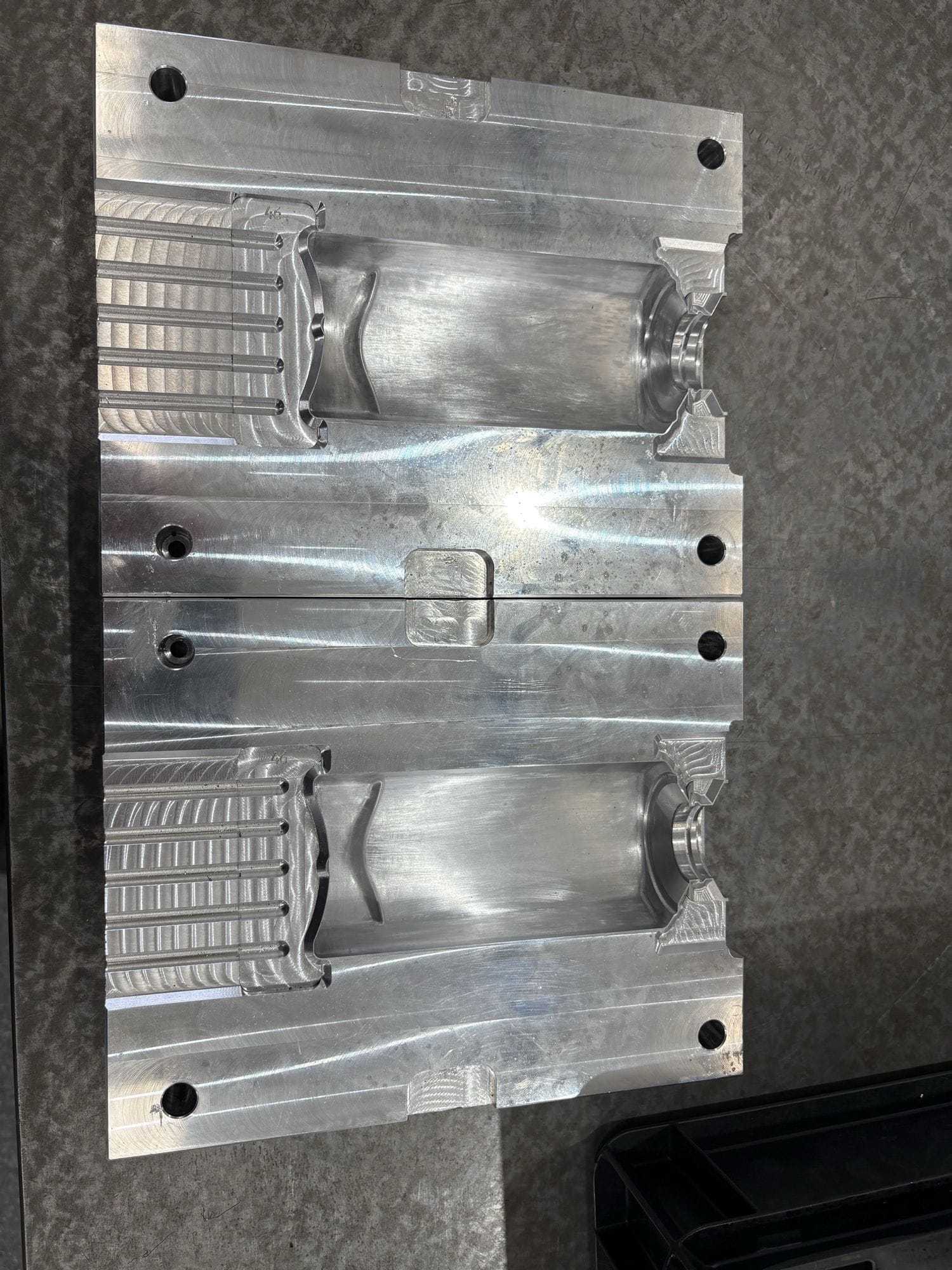
Aluminium tooling is commonly used for prototype and low-volume moulding because it is quicker and cheaper to machine than steel. It can be used to produce saleable parts while the design, assembly process or market demand is still being proven.
This is especially useful when early production parts may expose changes that are difficult or expensive to make once a high-volume steel tool has been commissioned.
How many parts do you realistically need?
The expected quantity should influence the tooling route from the start.
If demand is measured in hundreds or a few thousand parts, a high-volume steel mould may be unnecessary. Aluminium tooling can support low-volume and bridge production, while steel becomes more appropriate where volumes, tool life or material wear justify the additional investment.
The material itself should still be chosen for the part rather than the quantity. A mechanically demanding component does not stop needing polyamide (PA), polyoxymethylene (POM) or another engineering polymer simply because the production run is small.
What happens if demand grows?
Low-volume production can also be used to prove the product before committing to a larger manufacturing programme.
Using the intended production resin during the first runs can reveal problems with fit, performance and processing before higher-volume tooling is ordered. Aluminium tooling can then continue producing parts while a longer-life production tool is prepared if demand increases. This is often referred to as bridge production.
Do you need all the parts at once?
If demand is uncertain or spread throughout the year, smaller repeat runs can make more sense than producing the full quantity upfront.
Low-volume production allows parts to be made as they are needed, which can reduce the amount of finished stock held and lower the risk of being left with obsolete parts if the design or demand changes.
For low-volume projects, the material should meet the same functional requirements as any other moulded component. The difference is that tooling and batch size can be matched more closely to the level of demand and the maturity of the design.
Frequently asked questions
What materials are used in injection moulding?
Common materials used in injection moulding include ABS, PP, PC, PA, POM, HDPE, PE and PMMA. Flexible thermoplastic materials such as TPU can also be moulded.
The right material depends on what the finished part needs to withstand and how it needs to perform.
What plastics can be injection moulded?
A wide range of thermoplastics can be injection moulded, from lower-cost materials such as PP and PE to engineering plastics such as PC, PA and POM.
The polymer also needs to suit the component geometry and moulding process. Flow characteristics, shrinkage, processing temperature and moisture sensitivity can all affect whether a particular grade works well for the part being produced.
What is the best plastic for injection moulding?
There is no single best plastic for injection moulding.
PP is useful for lightweight parts, chemical resistance and living hinges. PC is often selected for high impact resistance. PA and POM suit many mechanically loaded or wear-prone components, while PMMA is commonly used where optical clarity and surface appearance matter.
The best choice is the least complicated material that meets the actual mechanical, thermal, environmental and regulatory requirements of the component.
Which injection moulding material is cheapest?
Commodity plastics such as PP and PE are generally less expensive than engineering polymers such as PC, PA and POM.
The cheapest resin does not necessarily produce the cheapest part. Material usage, cycle time, drying, scrap, tooling and the difficulty of processing the selected grade can all affect the finished component cost.
For a low-volume project, the amount of material actually required and the tooling route can have more influence on the overall project cost than a small difference in resin price.
What makes a material suitable for injection moulding?
The material needs to flow through the mould and fill the cavity reliably without degrading during processing. Its shrinkage and cooling behaviour also need to be predictable enough to produce the required dimensions and surface finish.
That only determines whether the material can be moulded successfully. It must still be suitable for the finished component, including its loads, working temperature, chemical exposure, appearance and any regulatory requirements.
Need help choosing the right material?
If you have a component in development, send Gemini your drawing or 3D model, expected quantities and details of how the part will be used.
The team can review the component, material requirements and tooling options before recommending a route into production through our plastic injection moulding service.
If you would find it useful to see how the parts themselves are made, our guide to how injection moulding works, step by step covers the process from tool to finished component.