Injection moulding costs come in two parts. First, there is a one-off cost for the mould tool. Second, there is a price for every part you make. The tool is usually the larger investment, while the price per part is shaped by material, part size, cycle time and quantity.
Because every part is different, there is no single price list. But once you understand what drives each cost, you can make choices that bring the total down, often before a tool is even machined.
This guide breaks down UK injection moulding costs in plain English for engineering, product and procurement teams. It covers tooling, the price per part, small runs, 3D printing and the design decisions that make the biggest difference.
What Makes Up Injection Moulding Costs?
Think of injection moulding costs as a simple sum:
- The mould tool: a one-off investment, shared across every part made from it.
- Set-up: the time to fit the tool, set the machine and prove the first parts on each run.
- The price per part: material, machine time and any finishing or assembly.
On a short run, the tool and set-up make up most of the cost of each part. On a long run, they are spread so thinly that the price per part is driven almost entirely by material and cycle time.
That is why the same part can have very different unit prices at 100 pieces and at 10,000 pieces.
How Much Does an Injection Mould Cost?
The mould tool is usually the most expensive part of the whole injection moulding process. Its price depends on:
- component size and complexity: bigger, more detailed parts need bigger, more detailed tools;
- tool material: aluminium for prototypes and low volumes, steel for production;
- number of cavities: more cavities make more parts per cycle, but cost more to build;
- required tolerances: tighter tolerances take more machining and checking;
- surface finish: polished or textured surfaces add tool finishing work;
- inserts, slides and moving features: undercuts and side holes need extra mechanisms;
- anticipated production volume: this decides how durable the tool needs to be.
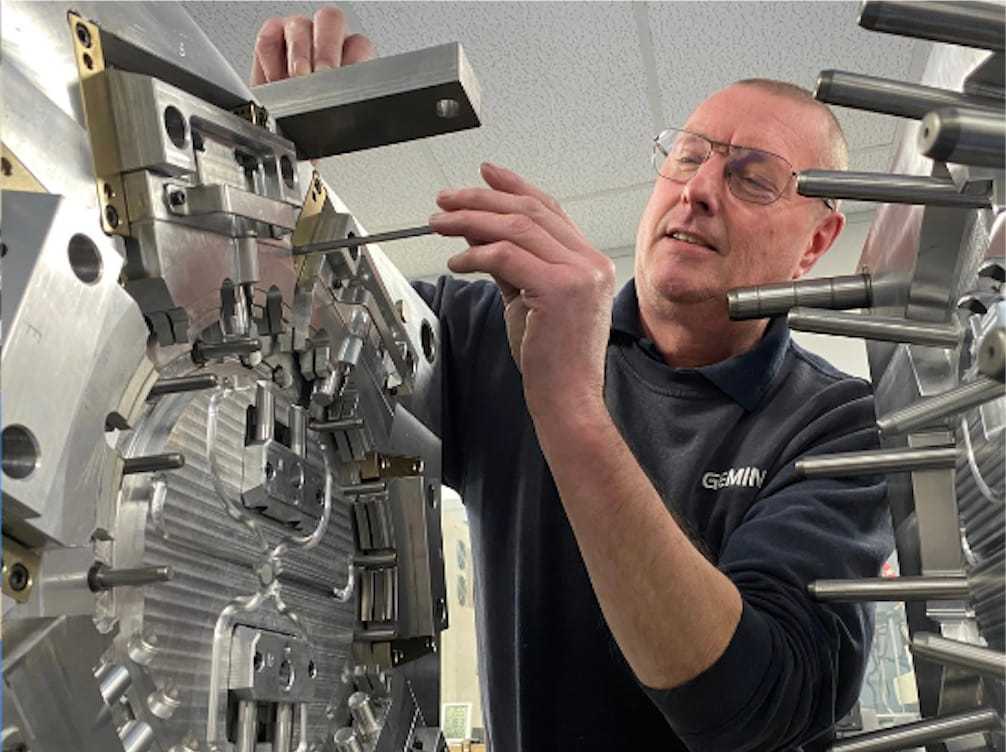
At Gemini Manufacturing, tools are designed and machined in our own UK toolroom, next to the presses. Read more about our injection mould tooling, from aluminium prototype tools to P20 steel production tools.
Aluminium or Steel: How Does the Tool Material Change the Cost?
Tool material is one of the biggest levers on injection moulding costs.
| Tool type | Best for | How many parts | Why choose it |
|---|---|---|---|
| Aluminium | Prototypes, trials and low volumes | Hundreds to thousands | Lower upfront cost, quicker to make, easier to modify |
| P20 steel | Production runs | Guaranteed for a minimum of 10,000 parts at Gemini Manufacturing | More durable, multi-cavity options lower the part price |
Aluminium tools are simpler and quicker to machine. They are a sensible way to prove a part in its real production material before you invest in steel. P20 steel tools cost more up front, but they last longer and can be multi-cavity, which brings the cost of each part down at higher volumes.
What Changes the Price Per Part?
Once the tool exists, these factors set the price of each moulding:
- Material: commodity plastics such as polypropylene and polyethylene usually cost less than engineering plastics such as polycarbonate and nylon. ABS often sits in the middle.
- Part size and weight: more plastic means more material cost.
- Cycle time: thick walls take longer to cool, so each part ties up the machine for longer.
- Number of cavities: a two-cavity tool makes two parts per cycle.
- Finishing and assembly: printing, painting, inserts or assembly add to the unit price.
- Inspection and paperwork: regulated sectors may need extra checks and records.
Our guide to injection moulding materials compares common plastics on strength, heat resistance, appearance and cost.
How Does Quantity Affect Injection Moulding Costs?
Quantity is where injection moulding costs change most. The tool is paid for once. Every extra part shares that cost, so the more you make, the lower the tool cost per part.
In practice:
- very small runs carry a high share of tooling and set-up in each part;
- medium runs begin to show the real value of moulding;
- large runs see a low price per part, especially with multi-cavity tools.
Sharing realistic volumes, now and for the next year or two, helps a moulder recommend the right tool. There is little point paying for a multi-cavity steel tool if you need 300 parts. Equally, an aluminium tool may not be the best choice if you will need tens of thousands.
Is Injection Moulding Worth It for Small Runs?
Often, yes, if the tooling is matched to the volume. Using aluminium tooling, simplified mould designs or single-cavity tools can reduce the upfront investment for smaller runs.
At Gemini Manufacturing, low volume work is our core business. We support production runs starting from as few as five parts, and prototype injection moulding runs from 5 to 500 parts on aluminium and bridge tooling. This lets you test a part in the real production material, then move into larger volumes on the same site.
Small runs make most sense when:
- you need production-quality parts, not just models;
- the part needs a real engineering material;
- you are validating a part before scaling to volume production;
- 3D printing cannot give the strength, finish or accuracy you need.
When Does Injection Moulding Become Cheaper Than 3D Printing?
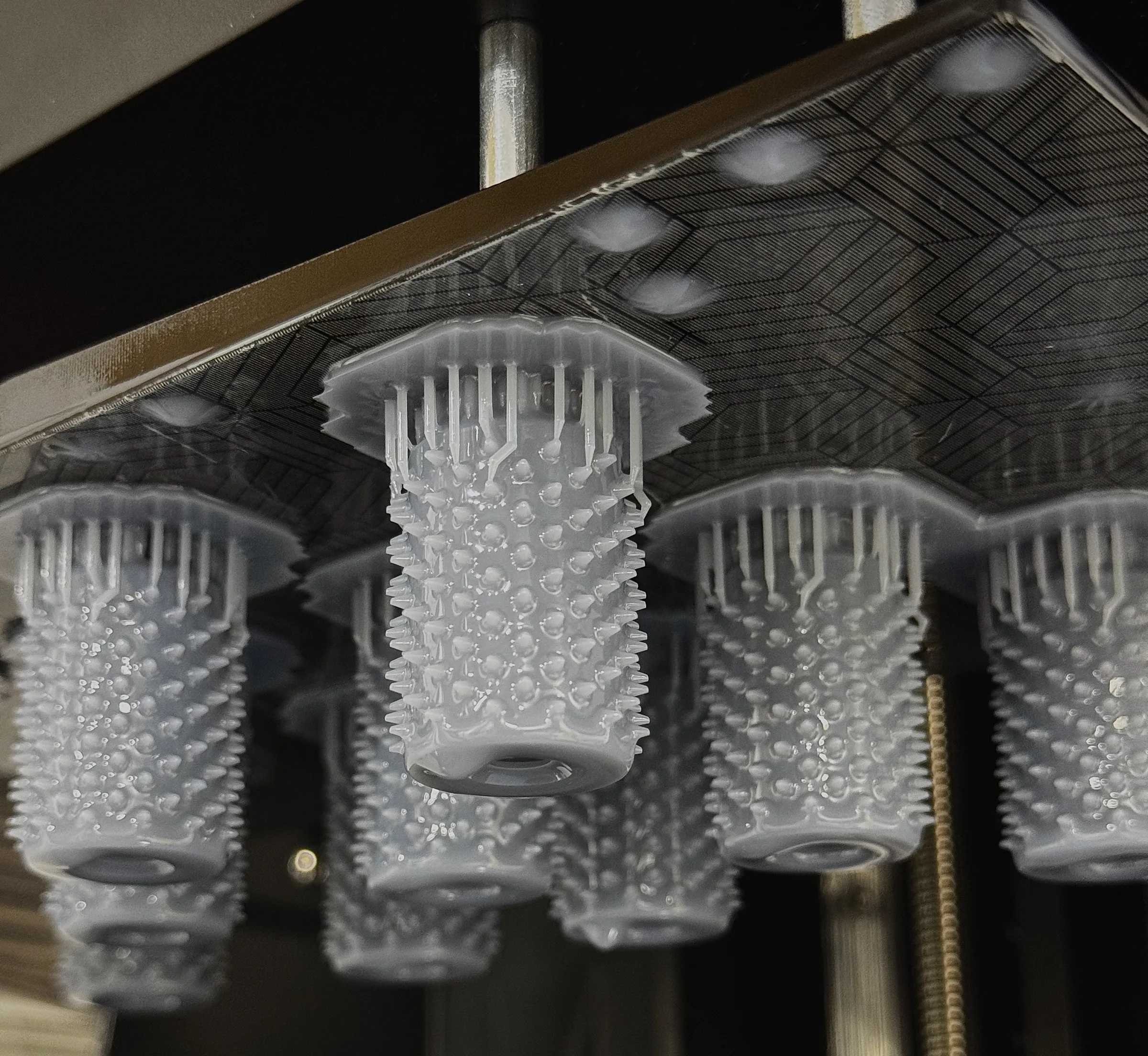
3D printing has no tooling cost, so it is usually cheaper for one-offs and very small quantities. Injection moulding has a tooling cost, but a much lower price per part once the tool is made.
So there is a crossover point. Below it, 3D printing tends to win. Above it, injection moulding costs less per part. Where that point falls depends on the part’s size, complexity, material and finish, so it is worth quoting both routes.
Injection moulding also gives benefits beyond price:
- parts in real production plastics;
- consistent quality from part to part;
- surface finishes such as polished or textured;
- faster production once the tool is running.
Many projects use both. 3D printing proves the shape early, then injection moulding takes over for production.
How Can You Reduce Injection Moulding Costs?
The cheapest time to save money is before the tool is machined. Good design is one of the easiest ways to bring injection moulding costs down.
- Keep wall thickness even. Thinner, even walls cool faster and reduce cycle time.
- Avoid unnecessary undercuts. Each one may need a slide or insert in the tool.
- Add draft angles. Slight tapers help parts release from the tool.
- Relax tolerances where you can. Only specify tight tolerances where they matter.
- Choose the right material. Do not pay for an engineering plastic if a commodity grade will do.
- Match the tool to the volume. Start in aluminium if volumes are uncertain.
- Combine parts where possible. Fewer parts can mean fewer tools and less assembly.
Our design team can review your part, and simulate how the plastic will flow, before a tool is made. To understand each stage, see our guide to the injection moulding process.
Why Choose Gemini Manufacturing for Plastic Injection Moulding?
We have delivered plastic injection moulding in the UK for more than 26 years. Design, tooling, moulding, finishing and assembly all happen on our own site in Buckinghamshire.
That helps keep your injection moulding costs predictable:
- No outsourcing: tooling and moulding are not sent to Europe or the Far East, which suits teams reshoring production to the UK.
- Tooling in-house: you deal directly with the people manufacturing your tool.
- Free tool maintenance and replacement for as long as you manufacture with us.
- Low, medium or high volume: from single-cavity tools to multi-cavity production.
- ISO 9001 certified quality management.
Frequently Asked Questions
How much does an injection mould cost?
It depends on the size and complexity of the part, the tool material, the number of cavities, tolerances, surface finish and expected volume. Aluminium tools cost less up front and suit low volumes. P20 steel tools cost more but suit production. Gemini Manufacturing quotes each tool based on your part.
Is injection moulding worth it for small runs?
Often, yes. Aluminium or single-cavity tooling can reduce the upfront investment. Gemini Manufacturing supports production runs from as few as five parts, and prototype runs from 5 to 500 parts, so you can test a part in real material before scaling up.
When does injection moulding become cheaper than 3D printing?
3D printing is usually cheaper for one-offs and very small numbers because there is no tool. As quantities rise, the low price per moulded part makes injection moulding cheaper. The crossover depends on the part, so it is worth quoting both.
Who maintains the mould tool?
At Gemini Manufacturing, we maintain and replace your mould tool free of charge for as long as you manufacture with us.
Get a Clear Quote for Your Moulded Part
The quickest way to understand your injection moulding costs is a quote for your real part and real volumes. Send us a STEP file, a drawing or a specification. We will reply within 24 hours with any questions, then send a free, no-obligation quote.
Discover our plastic injection moulding service, or contact Gemini Manufacturing to talk through your project.
About Gemini Manufacturing
Gemini Manufacturing is a UK precision plastics manufacturer based in Worminghall, Buckinghamshire. Established in 1999, Gemini Manufacturing runs design, tooling, injection moulding, blow moulding, finishing and assembly in its own facilities, and is ISO 9001 certified.