If your team is specifying a bottle, container or hollow plastic part, the first question from engineering and procurement is usually: what will it cost? The honest answer is that plastic blow moulding cost depends on five things. These are the mould tool, the material, the size of the part, its wall thickness and how many parts you order.
The good news is that blow moulding is often one of the more affordable ways to make hollow parts. Blow mould tools generally need only a cavity, not a cavity and a core. That can mean a lower upfront tooling investment than injection moulding.
This guide explains each cost driver in plain English. It also shows where you can make savings, and what to send a manufacturer so you get an accurate quote quickly.
What Is Plastic Blow Moulding?
Blow moulding is a way of making hollow plastic parts. Molten plastic is formed into a tube or a preform, placed inside a mould tool, then inflated with air until it takes the shape of the cavity. Once it cools, the tool opens and the part is released.
There are two main routes you will hear about:
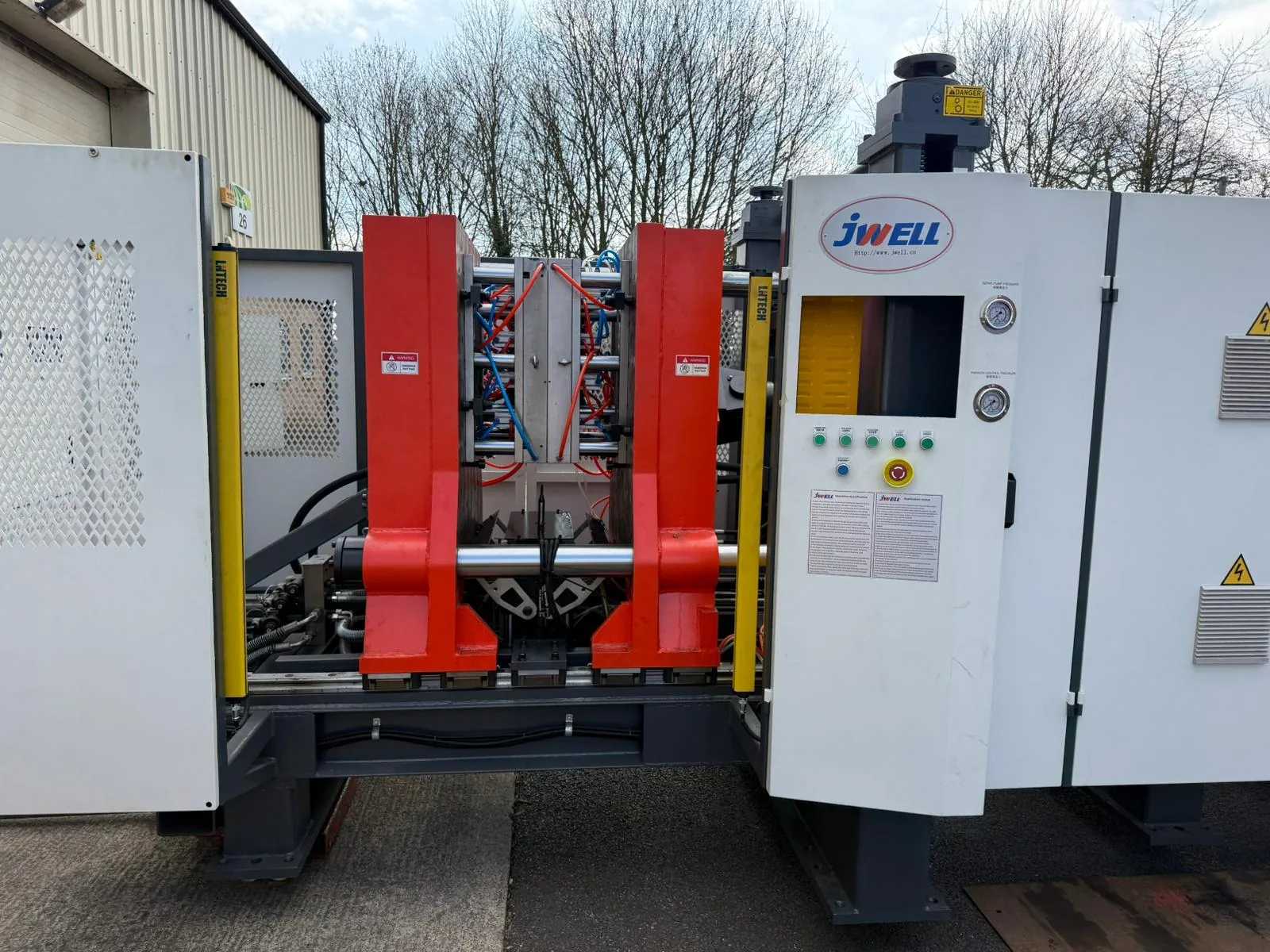
- Extrusion blow moulding (EBM): a tube of molten plastic (a parison) is extruded between two mould halves, which close around it before air is blown in. It suits bottles, containers, ducts and technical hollow parts in materials such as HDPE, PP and PETG.
- Injection stretch blow moulding (ISBM): a preform is injection moulded first, then heated, stretched and blown. It is used for high-clarity PET bottles and containers.
If you would like the full step-by-step process first, read our guide to the blow moulding process. This article focuses on the money side.
What Affects Plastic Blow Moulding Cost?
Every quote is built from two parts: a one-off tooling cost, and a price per part. The factors below shape both.
1. The mould tool
The tool is usually the biggest single item in your plastic blow moulding cost. Its price depends on:
- the size of the part and the tool needed to form it;
- how complex the shape is, including handles, threads and fine detail;
- the number of cavities (how many parts are made per cycle);
- the tool material.
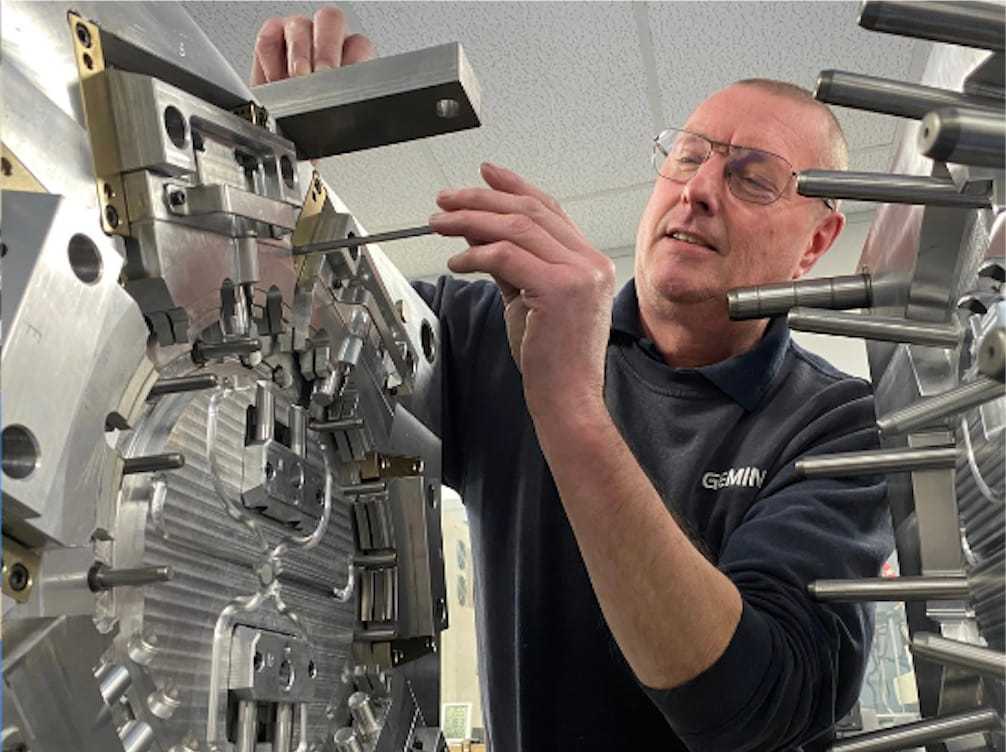
At Gemini Manufacturing, blow mould tools are machined from aluminium in our own toolroom. Because a blow mould usually needs only a cavity, tooling for blow moulding is relatively low in cost compared with many injection mould tools.
2. The material
Different plastics cost different amounts per kilo, and they behave differently in the machine. Common blow moulding materials include HDPE, LDPE, PP, PET and PETG. A tough, chemical-resistant HDPE container and a crystal-clear PET bottle will be priced differently, because the material and the process both change.
Additives also play a part. Colour, UV stabilisers or other additives are dosed into the material, and each adds a little to the part price.
3. Part size and weight
Bigger parts use more plastic and take longer to cool. That means a higher material cost and a longer cycle time. A 200ml bottle and a 50-litre vessel sit at very different ends of the scale, even if they are made the same way.
4. Wall thickness and structure
Wall thickness affects strength, weight and material use. A part with thicker walls costs more per piece. Specialist structures cost more again. For example, co-extrusion lets several layers sit in one wall, such as a barrier layer or a recycled layer. That brings real benefits, but it also adds set-up and material cost.
5. Order quantity
Quantity changes the sums more than anything else. The tooling cost is spread across every part you make, so the more parts you order, the lower the tooling cost per part. Larger runs also make the set-up time a smaller share of the job.
Is Blow Moulding Expensive?
Not usually, compared with the alternatives for hollow parts. Blow moulding tends to be good value because:
- tooling usually needs only a cavity rather than a cavity and a core;
- it uses material efficiently and makes lightweight parts;
- cycle times are relatively fast once a tool is running;
- it can form hollow shapes that would be difficult or more costly to make by injection moulding.
Where blow moulding can feel expensive is on very low-volume orders, because the tool cost is spread across only a few parts. The answer is often to plan the project in stages, from samples and validation through to volume production.
Why Do Blow Mould Tools Often Cost Less Than Injection Mould Tools?
An injection mould has two halves that shape both the outside and the inside of a part: a cavity and a core. Molten plastic is injected under high pressure to fill the gap between them.
A blow mould works differently. Air pressure pushes the plastic against the cavity wall, so the inside of the part does not need its own steel core. Fewer machined surfaces generally means a simpler tool, and that can mean a lower plastic blow moulding cost at the start of a project.
This is one reason blow moulding can suit lower-volume production. There are fewer upfront costs to recover before your parts start to pay their way.
How Does Order Quantity Change Plastic Blow Moulding Cost?
Think of your plastic blow moulding cost as a simple sum:
- Tooling: paid once, then shared across every part.
- Set-up: paid each production run.
- Material and machine time: paid for every part.
On a small run, the tooling and set-up make up a large share of each part’s price. On a long run, they almost disappear, and the price per part is driven mainly by material and cycle time.
That is why it pays to share realistic volumes when you ask for a quote. A manufacturer can then suggest the right tool and process for your numbers, rather than quoting for a volume you may never need.
How Can You Reduce Plastic Blow Moulding Cost?
Small decisions early in a project can save money later. Here are practical ways to keep your plastic blow moulding cost under control:
- Design for the process. Simple, rounded shapes blow more evenly than sharp corners and deep recesses.
- Choose the material carefully. Do not specify a premium material if a standard grade will do the job.
- Review wall thickness. Use only the thickness the part needs for strength and performance.
- Consider a stock preform for PET samples. For ISBM bottles, starting from a stock preform can let you review sample bottles before committing to a dedicated tool.
- Plan volumes in stages. Prove the part with samples, then move into production with confidence.
- Consolidate with one supplier. When design, tooling, moulding and finishing sit under one roof, there are fewer hand-offs across your supply chain and less to go wrong.
What Does Gemini Manufacturing Include That Can Affect Your Total Cost?
Your plastic blow moulding cost is not only the price on the quote. It is also the time and risk between suppliers. At Gemini Manufacturing, we run plastic blow moulding in-house at our Buckinghamshire site, with tooling, moulding, trimming and finishing on one site.
Some practical points that help engineering and procurement teams plan:
- Extrusion and injection stretch blow moulding on the same site, so the process can be matched to the part.
- Size range from 200ml to 50 litres across our blow moulding machines.
- Co-extrusion for multi-layer walls, including barrier, recycled and coloured layers.
- Sample PET bottles in as little as five days when working from a stock preform.
- Free tool maintenance and replacement for as long as you manufacture with us.
We are ISO 9001 certified and have been manufacturing precision plastics in the UK for more than 26 years.
What Should You Send for an Accurate Blow Moulding Quote?
The more we know, the closer the first quote will be to the final price. Try to include:
- A drawing, CAD file (STEP is ideal) or photo of the part or a similar product.
- The material you have in mind, or what the part needs to do.
- The size or capacity, such as 500ml or 5 litres.
- Expected order quantities, now and over the next year.
- Any colour, multi-layer, recycled-content or additive requirements.
- Any finishing, printing or assembly needs.
Not sure about some of these? That is fine. Our team can advise on material and process before anything is fixed.
Frequently Asked Questions
Is blow moulding expensive?
Usually not, especially for hollow parts. Blow mould tools generally need only a cavity, not a cavity and a core, so the upfront tooling investment can be lower than injection moulding. The price per part then depends on material, size, wall thickness and quantity.
What order quantities can you support?
It depends on the part, the material and the tooling route. Gemini Manufacturing supports projects from prototype and sample parts through to repeat volume production. Send us your part details and forecast volumes, and we will recommend an approach that suits your quantities.
How long does a blow mould tool take to make?
Lead time depends on the size and complexity of the part and the number of cavities. Our blow mould tools are designed and machined in our own toolroom, so there is no wait for an outside toolmaker. We confirm a project-specific lead time with your quote.
Who pays for the mould tool?
The tool is normally quoted as a one-off cost at the start of a project. At Gemini Manufacturing, we maintain and replace your mould tool free of charge for as long as you manufacture with us.
Can I use recycled plastic to reduce cost?
Sometimes. Recycled content can be used where the material and product requirements allow it. Co-extrusion can also place a recycled layer inside a multi-layer wall. Whether it suits your part depends on appearance, performance and any regulations that apply.
Get a Clear Price for Your Blow Moulded Part
The best way to understand your plastic blow moulding cost is to get a quote based on your real part and real volumes. Send us a drawing, a CAD file, a sample or a specification, and our team will come back within 24 hours with any questions, followed by a free, no-obligation quote.
Explore our plastic blow moulding service, or contact Gemini Manufacturing to talk through your project.
About Gemini Manufacturing
Gemini Manufacturing is a UK precision plastics manufacturer based in Worminghall, Buckinghamshire. Established in 1999, Gemini Manufacturing runs tooling, blow moulding, injection moulding, finishing and assembly in its own facilities, and is ISO 9001 certified.